
Lone Tree Garage Door Guide
What Lone Tree's Climate and Older Housing Stock Do to Your Garage Door
Lone Tree homes built between 1938 and 2005 face cold winters that expose weather seals and draughts around garage doors. Here's what actually matters.
- Licensed & Insured
- Same-Area Service Calls
- Upfront Pricing
How Local Conditions Play In
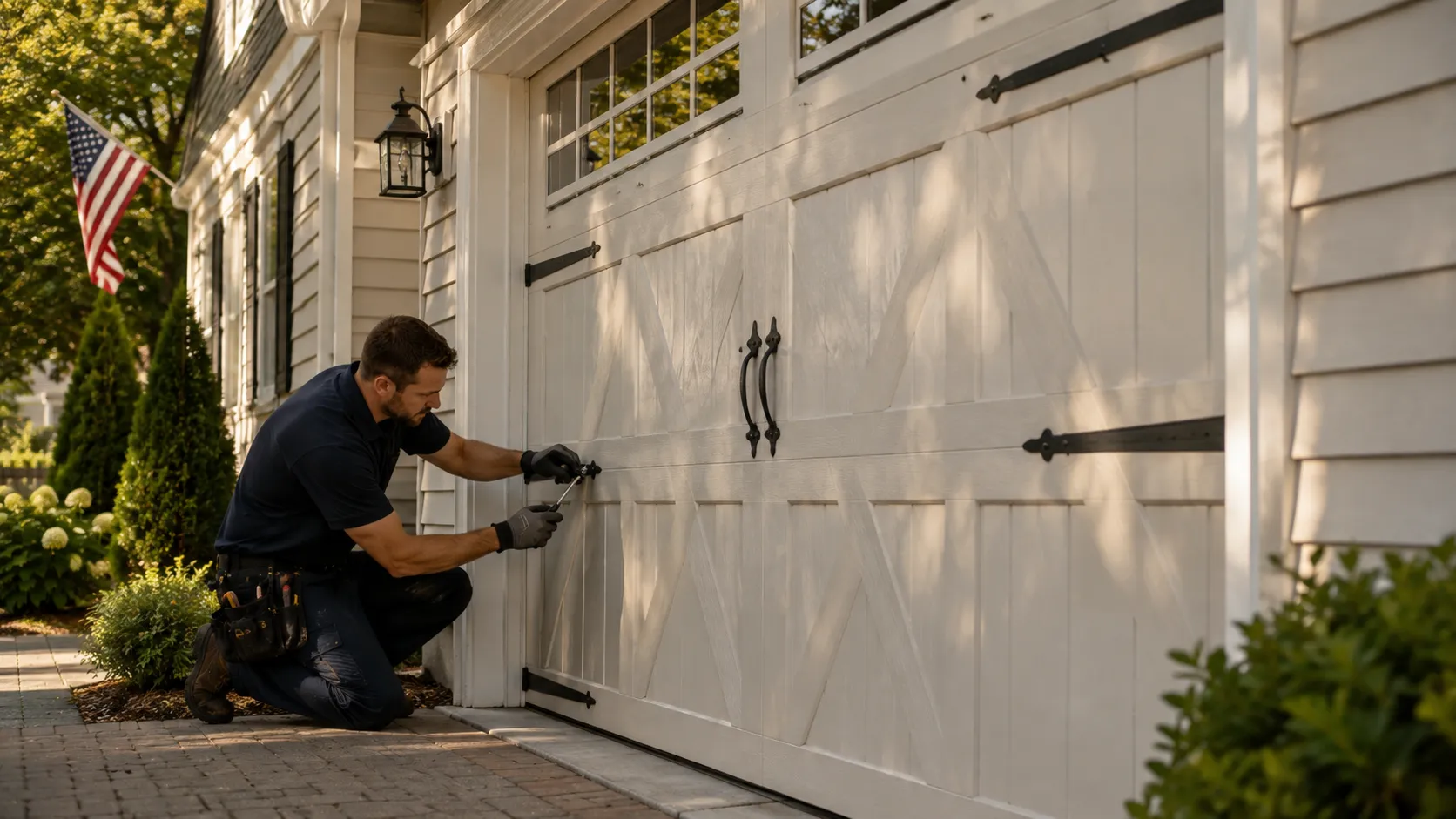
Lone Tree sits in a climate band the federal data marks as cold and severe, and that matters more here than it would somewhere milder because of what's actually attached to the houses. Housing across the service area was built between 1938 and 2005, with the bulk of it - across all 21 named neighborhoods tracked in the local data - going up in the 1980s and 90s. That means most garage doors in town are original steel sectional units on hardware that's now thirty-plus years old, paired with a climate that runs hard freeze-thaw cycles every winter.
That combination is the whole story. A steel door contracts in cold air, the weather seals and draughts along the bottom edge and side jambs harden and crack with age, and the gap between panel and frame widens right when you need it sealed tight. None of this is a defect in any one door.
It's what thirty-plus winters do to a product built in the 80s or 90s, in a place where winter actually bites. A door of the same age in a milder climate ages differently - this one doesn't get that break.
Checking It Yourself
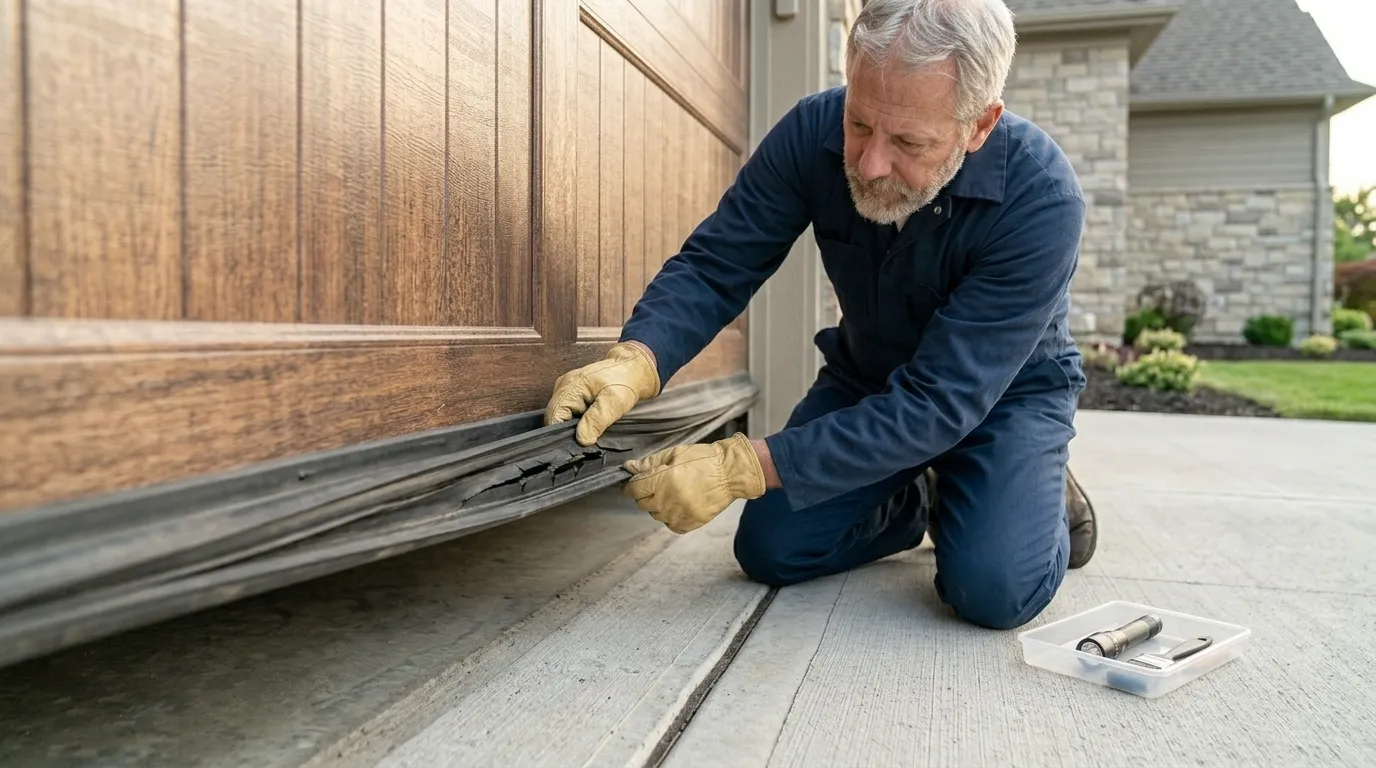
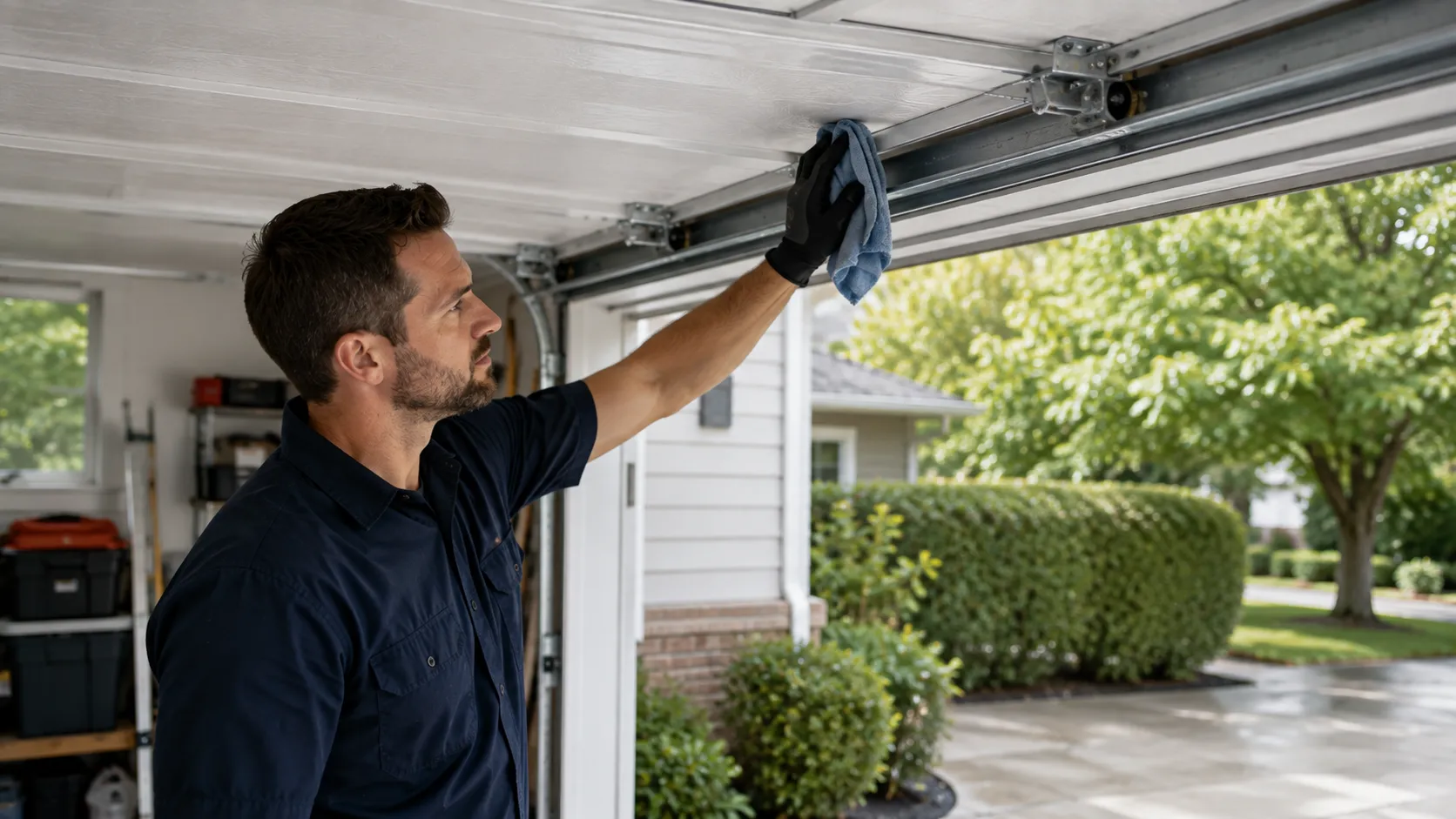
Start at the bottom seal. On a door from the 1980s or 90s stock common here, the rubber gasket along the floor is usually the first thing to go - press a thumb into it on a cold morning and if it's stiff instead of pliable, it's not sealing, it's just sitting there. That's the weather seals and draughts problem in one spot.
Next, look at the torsion spring above the door. Surface rust is normal after enough winters; flaking rust or a visible gap in the coil where it's stretched unevenly is not - that's a spring near the end of its life, and cold makes a tired spring more likely to let go, not less.
Check the tracks for anything besides dust: ice buildup at the bottom bend in winter is common on original hardware because the door doesn't seat as tight as it did new, letting cold air and moisture in where the rollers ride. And run a hand along the panel seams on a steel door from this era - a little waviness is cosmetic, but a seam that flexes when you push on it is metal fatigue, not paint.
We can't tell you from a description alone whether a spring is a week from failing or a year from it. That call needs eyes on the actual coil.
Season by Season
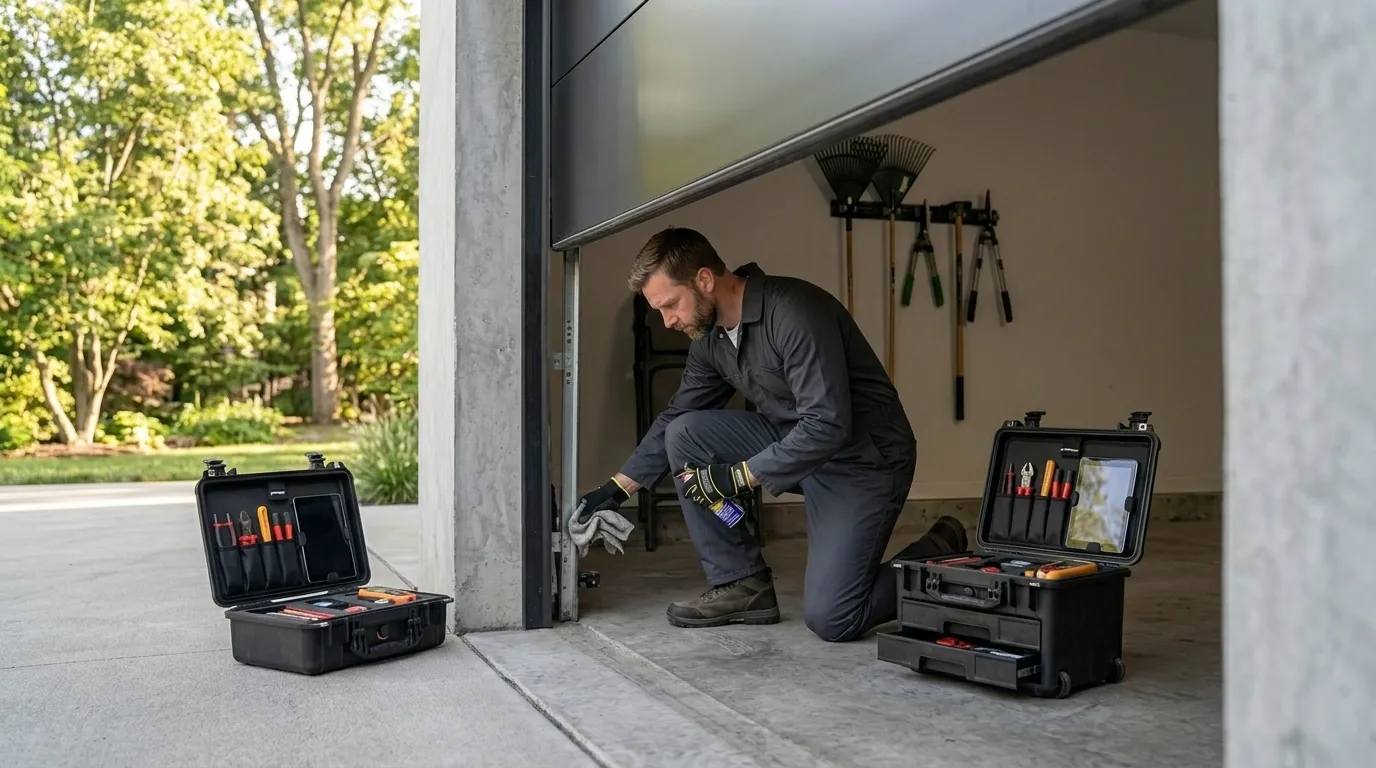
Fall is when the bottom seal and weather seals and draughts around the jamb should get checked, before the first hard freeze sets whatever gap already exists. A seal that's marginal in October is a gap that whistles by December.
Winter is where the cold-severe rating does its work. Steel contracts, torsion springs lose a measurable amount of tension in deep cold, and openers built for average loads start to strain lifting a door that's now slightly heavier to move because the track has less give. This is also when original hardware from the 1980s and 90s stock tends to announce itself - a spring that's been marginal all year picks the coldest morning to finally snap.
Spring brings the thaw cycle, and with it the freeze-thaw expansion that can shift a track's alignment by a fraction of an inch - enough to make a door bind or run rough that ran fine in August.
Summer is the quiet season here, and it's the right time to deal with anything the winter exposed rather than wait for it to fail on the next cold snap. Waiting until November to fix a spring you noticed fraying in April is the one seasonal mistake we see most.
What Is Going On
m. in January.
Rubber and vinyl seals stiffen and shrink as they age and as they cycle through cold-severe winters - that's the source of most weather seals and draughts complaints, and it's a wear item, not a failure. Steel panels contract slightly in deep cold, which is usually invisible unless the door was already a little out of alignment, in which case it's the difference between a smooth close and a door that catches.
Torsion springs lose tension gradually over years and lose it faster through repeated cold cycles, which is why a spring installed when a house was built in, say, 1991 is well past its expected working life by now regardless of how it looks.
Here's the honest limit: a door from that original 1980s-90s stock with a warped panel, a stiff opener, and a tired spring is often not worth patching piece by piece. Replacing the seal on a door that also needs a new spring and has a panel that won't sit flush is spending money on a door you'll replace within a year or two anyway. Sometimes the right answer is not to fix what's there.
How We Can Help
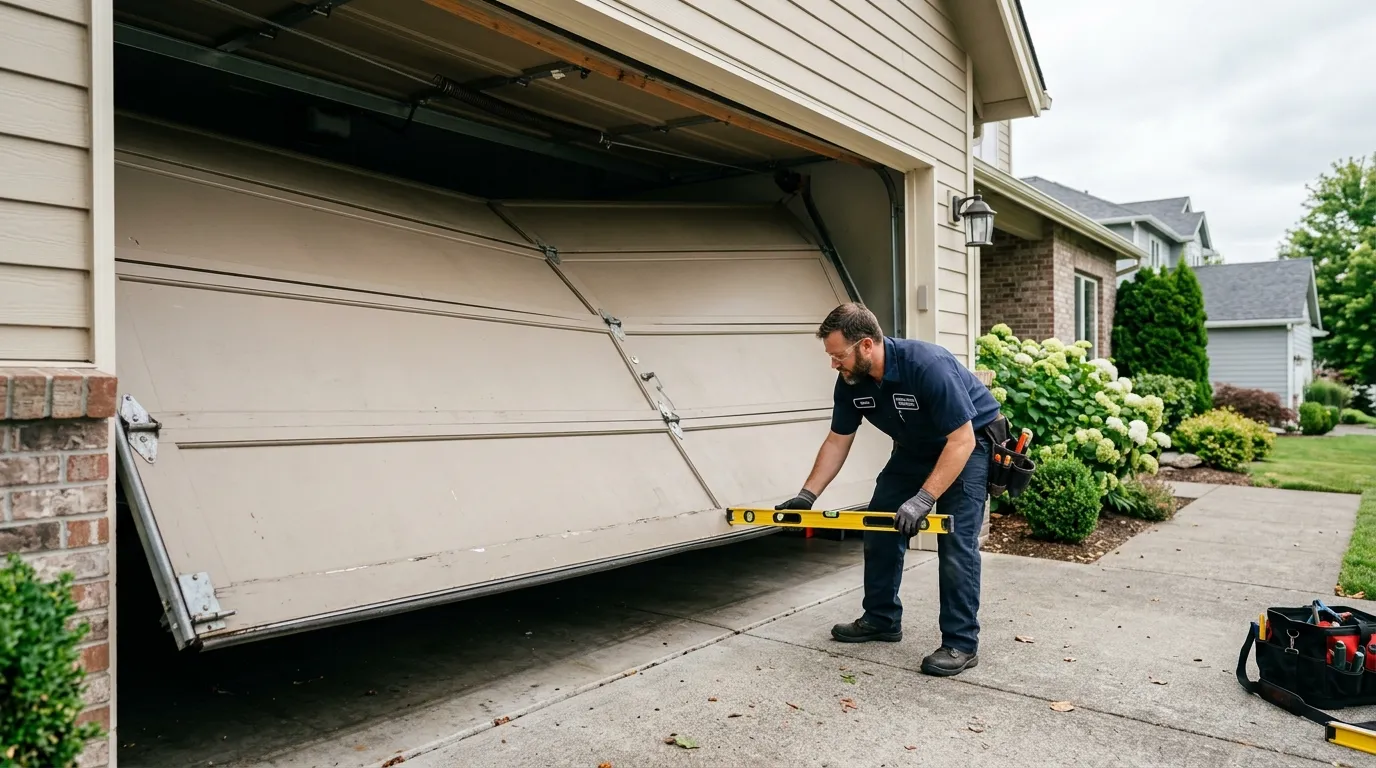
Garage Door Repair
Springs, cables, tracks, rollers, and openers fixed by a tech who explains the problem before touching anything.
Learn more →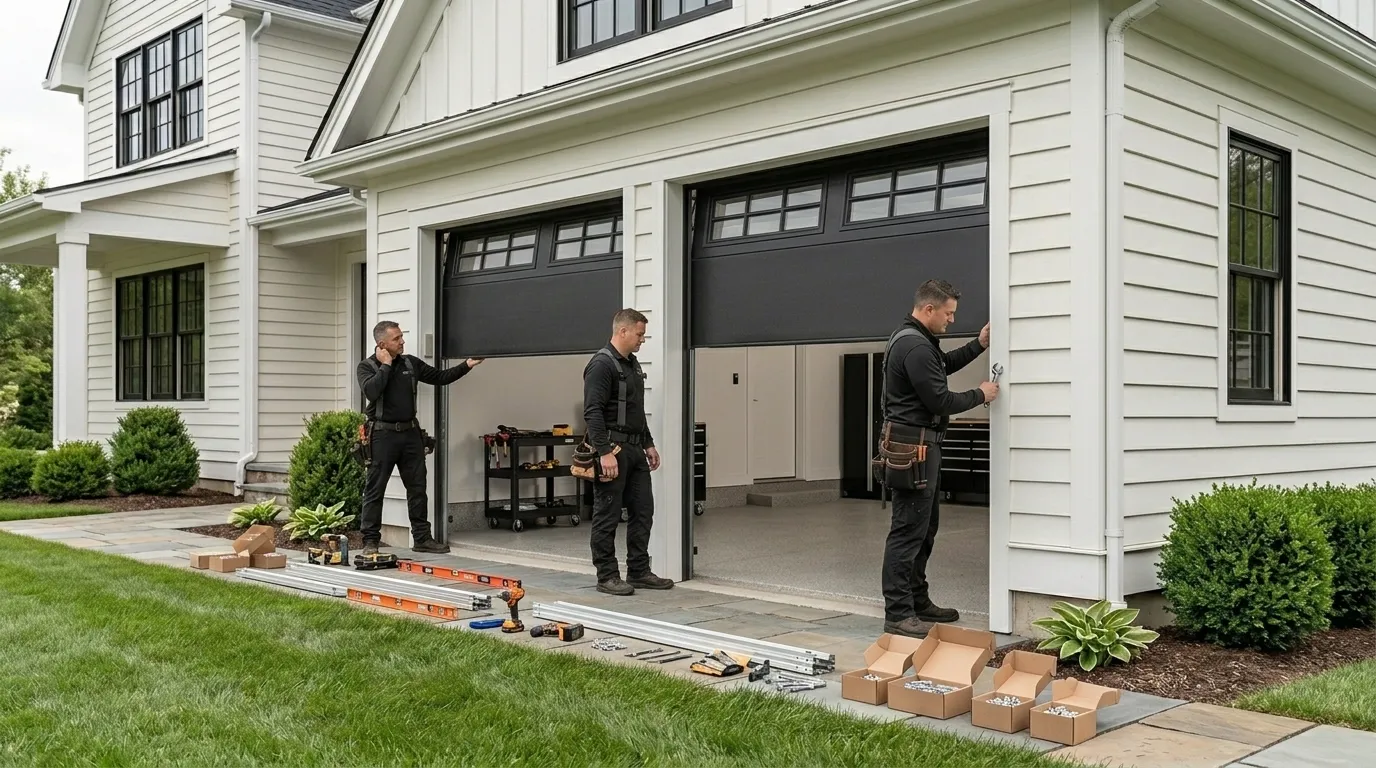
Garage Door Installation
New sectional doors sized and installed for the housing stock actually built in this area.
Learn more →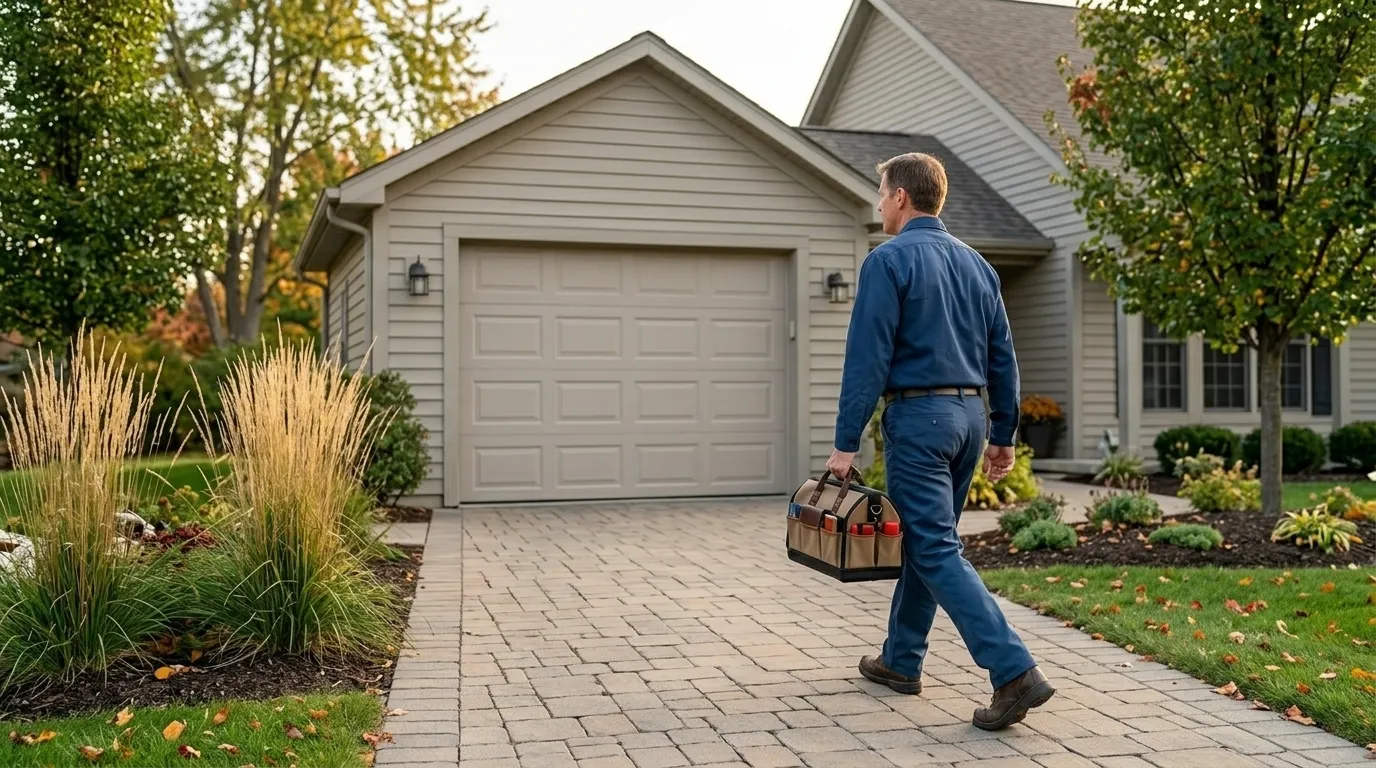
Garage Door Service
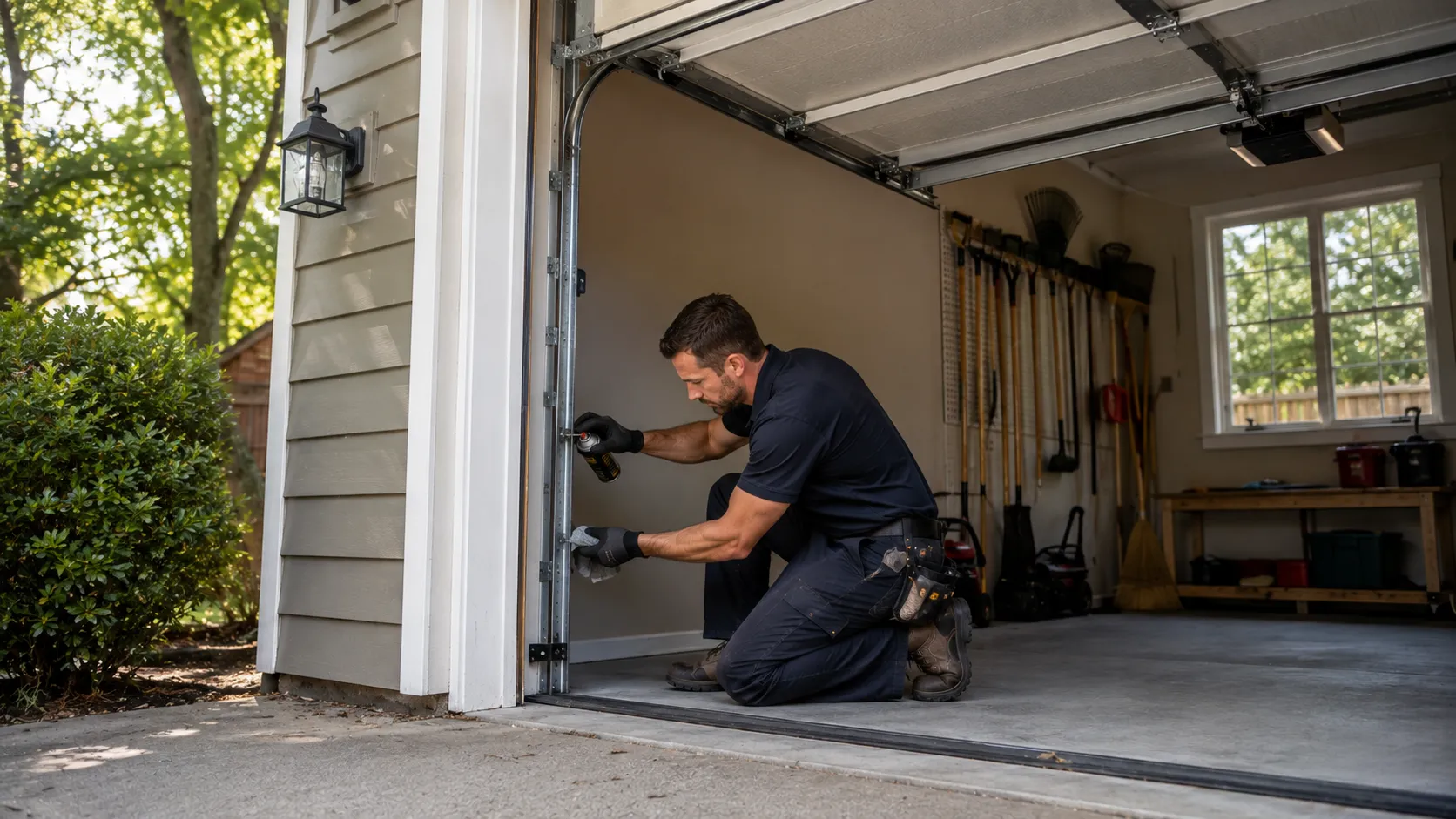
Tune-ups, lubrication, and safety checks that catch a small problem before it becomes a service call.
Learn more →Frequently Asked Questions
Why does my garage door feel harder to lift in winter?
Cold makes torsion springs lose some of their tension, and it makes the steel in an older panel contract slightly, which can tighten the fit in the track. On a door from the 1980s or 90s stock common in Lone Tree, both of those effects are more pronounced because the hardware has already lost tension to age before winter adds to it.
Is a drafty garage door worth fixing or should I replace the whole door?
It depends on what else is wrong. If the seal is the only issue, replacing it is cheap and worth doing. If the panel is also warped and the spring is old, you're often looking at a door near the end of its working life, and a new seal on it won't hold up long.
How often should I check the weather seal given our winters?
Check it each fall before the first hard freeze. In a cold-severe climate like Lone Tree's, seals that were fine last spring can harden enough over summer heat and winter cold cycles to start letting in draughts by the next season.
Have a Door That Needs a Second Opinion?
Call and describe what it is doing - we will tell you what it likely is.