
Lone Tree Garage Door Guide
Garage Door Trouble Shows Up Differently in Lone Tree's Cold
Lone Tree homes built mostly in the 1980s and 90s face cold-climate strain on garage door springs and openers. Here's what to check and when to call a pro.
- Licensed & Insured
- Same-Area Service Calls
- Upfront Pricing
How Local Conditions Play In
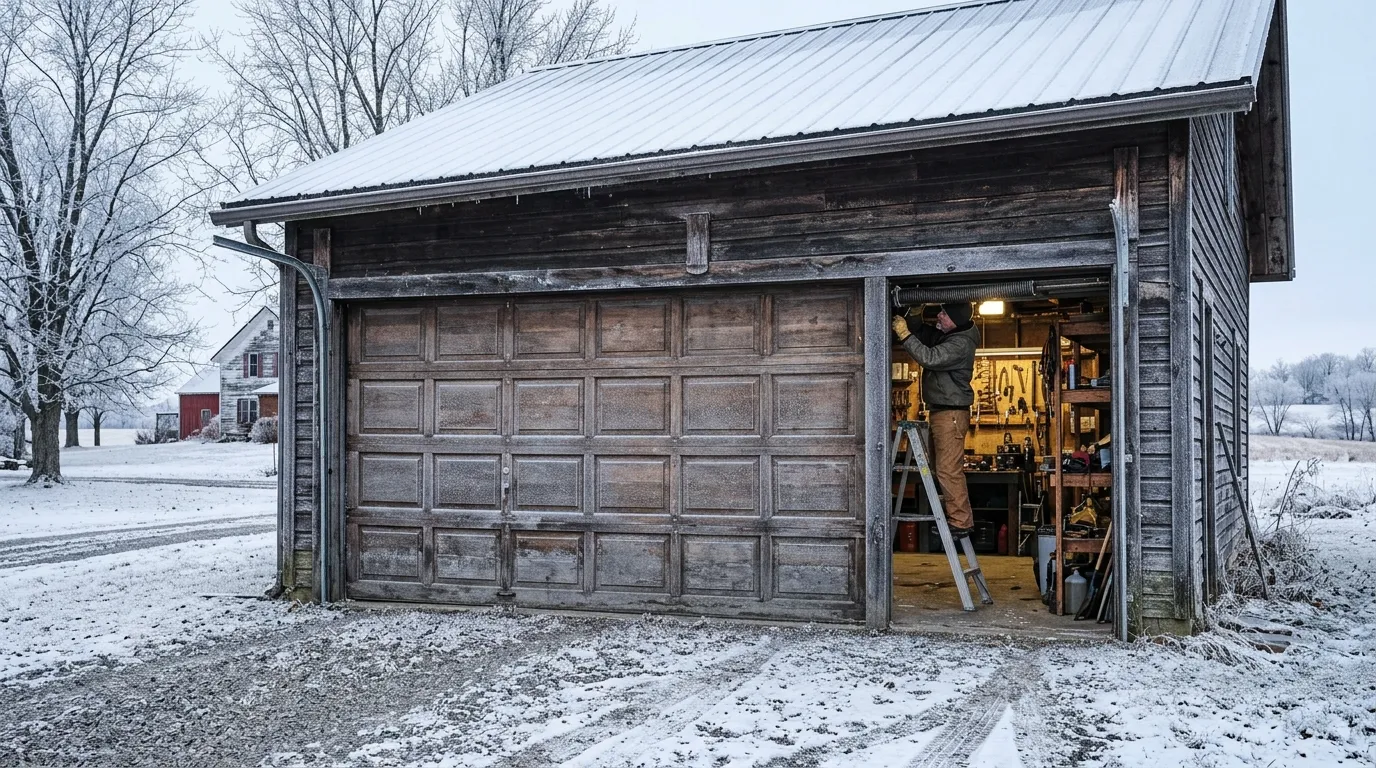
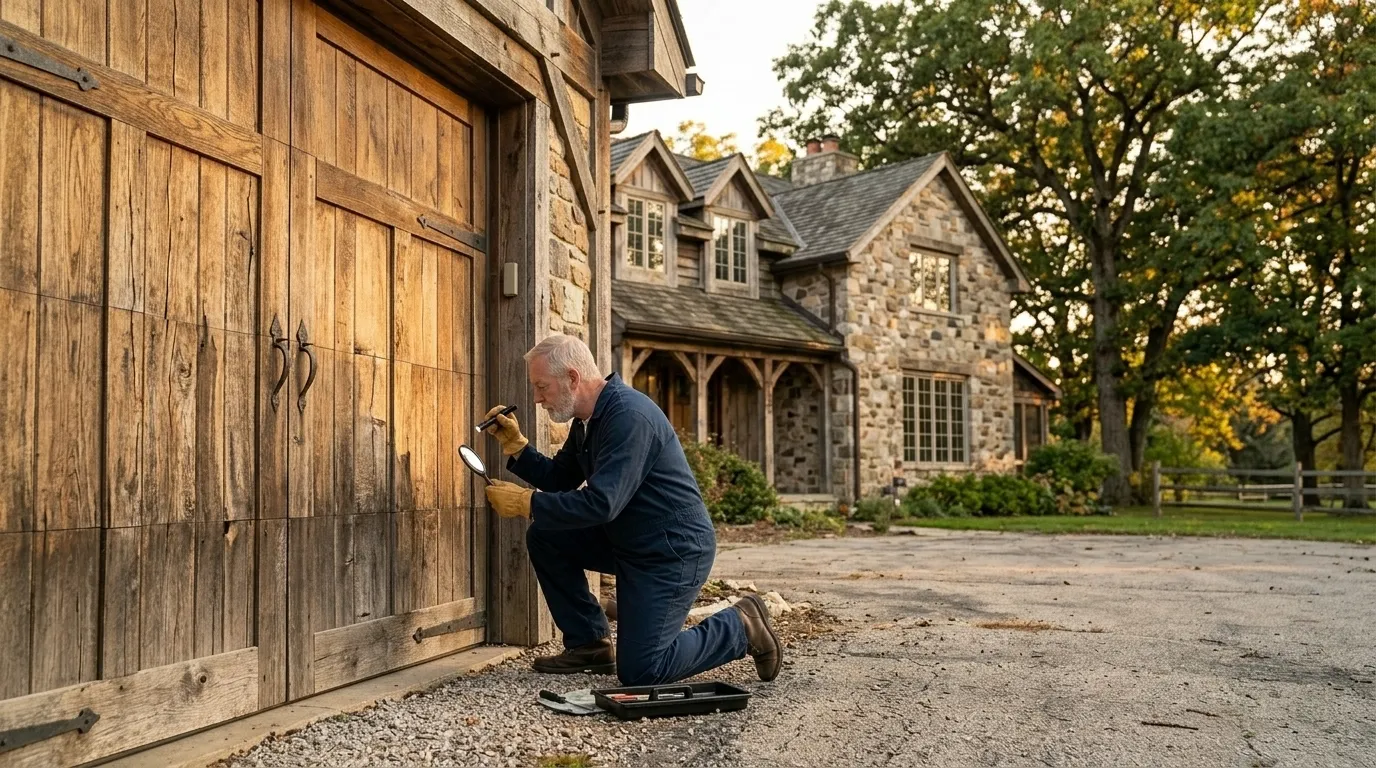
Most of the housing stock in this service area went up between 1938 and 2005, but the real weight of it is 1980s and 90s construction - that's what you'll find across the bulk of the 21 named areas we cover, from Meridian a mile out to places like Stonegate and Castle Pines a few miles further. That era of building means steel doors with little or no insulation, torsion springs sized for average winters, and openers with gearing that wasn't built to run hard in a cold severe climate band.
Cold changes steel. Torsion spring wire tightens as temperature drops, which raises the tension the spring is holding even though nothing about the door itself changed.
A spring that's been doing fine for years can snap on the first hard cold snap of the season, and it's rarely a coincidence - the same spring, wound in the summer, sees more stress in January than it was built to carry indefinitely. On a 1980s or 90s double door, that spring has usually already been through a couple decades of temperature swings before it finally gives.
Opener motors feel it too. Chain-drive units common to that construction era use lubricant that thickens in the cold, and gear teeth that have worn slightly over 30-plus years grab harder when everything contracts. None of this is dramatic - it's slow wear meeting a specific stress, twice a year, every year.
Checking It Yourself
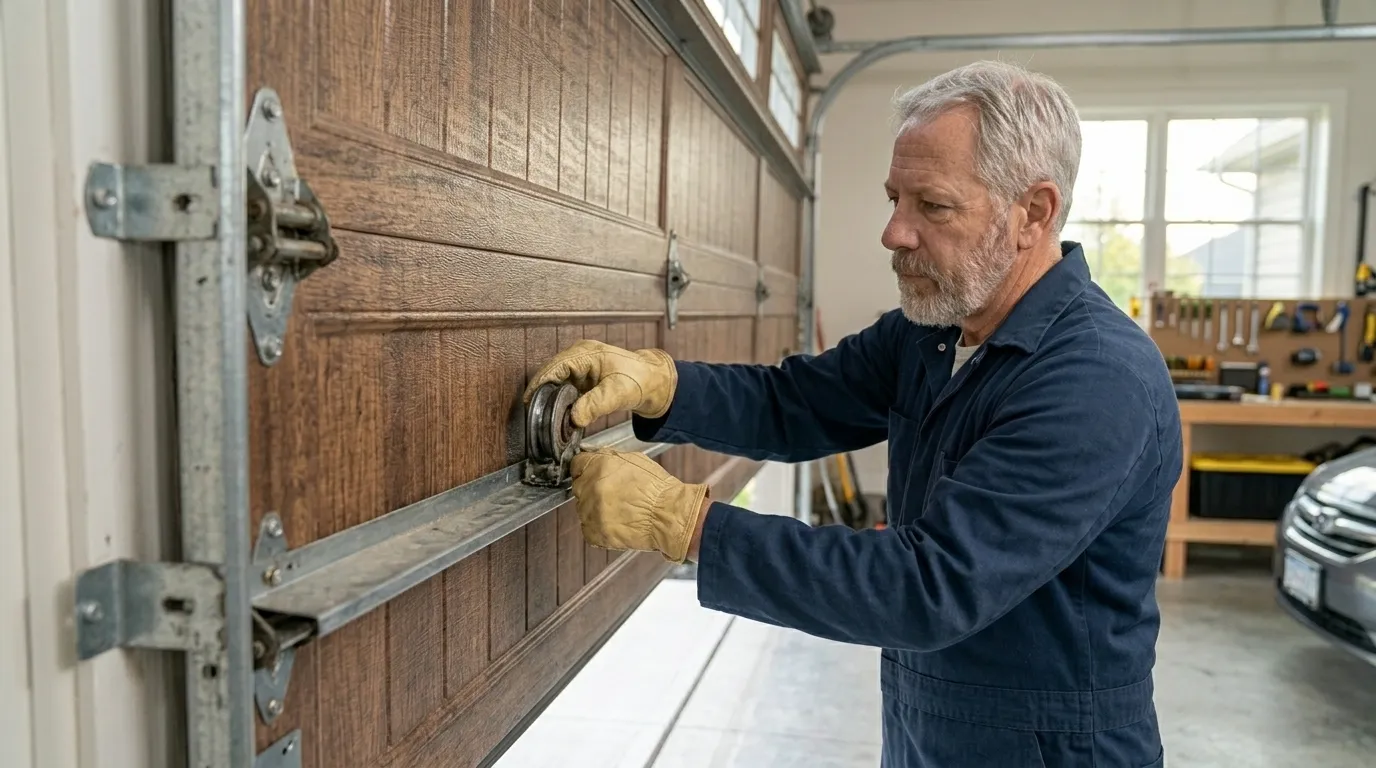
Start with the door itself, not the opener. Disconnect the opener, lift the door by hand about halfway, and let go.
A door in good balance stays roughly where you left it. If it drops or shoots up, the spring tension is off, and on a torsion spring that's not a DIY adjustment - the wire is under enough load to hurt you.
Next, look at the weatherstripping along the bottom and sides. On doors from the 1980s and 90s stock common here, that rubber has usually been replaced at least once, and if it's cracked or shrunk away from the frame, cold air is getting past it and the seal is doing nothing.
Listen to the opener run through a full cycle. Grinding, a pause before it starts moving, or a click that repeats without the door reacting are all signs the gear or motor is working harder than it should, and cold weather exaggerates all three because the metal contracts and clearances tighten.
Check the track for a gap between the roller and the rail, especially near the top corners - that's where age and temperature swings show up first as slight misalignment.
One honest limit here: a balance or spring problem isn't something to keep testing once you've found it. Repeated lifting on a bad spring is how the cable or bracket fails too.
Season by Season
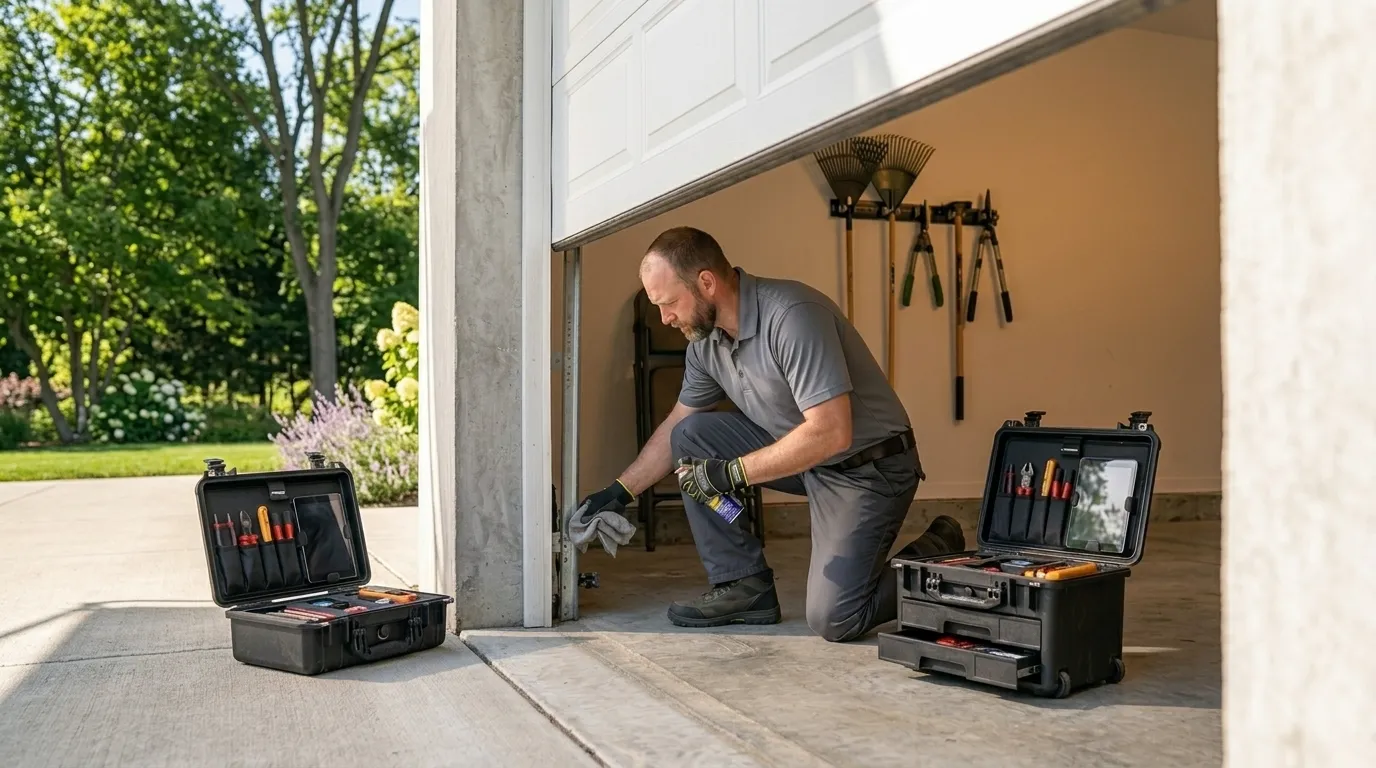
Late fall through winter is when spring failures cluster in a cold severe climate band. As temperatures drop, spring tension rises on its own, and a spring that was marginal in October is often the one that breaks on the first real cold week. If your door has never had its springs replaced and the house dates to the 1980s or 90s stock common in this area, that first hard freeze is the test it hasn't had in a while.
Early spring brings its own issue: freeze-thaw cycling on concrete slabs can shift a garage floor by a fraction of an inch, just enough to throw off track alignment that was fine all winter. That shows up as a door that binds or rubs on one side only when the weather starts warming.
Summer is comparatively easy on the hardware, but heat can still swell wood-trimmed doors from that era enough to bind against the frame, and dried-out weatherstripping from a winter of cold contraction tends to finally crack visibly once warm weather returns.
The pattern that matters most: cold season is when hidden wear turns into a failure. If a spring or opener is already marginal, this is when it announces itself.
What Is Going On
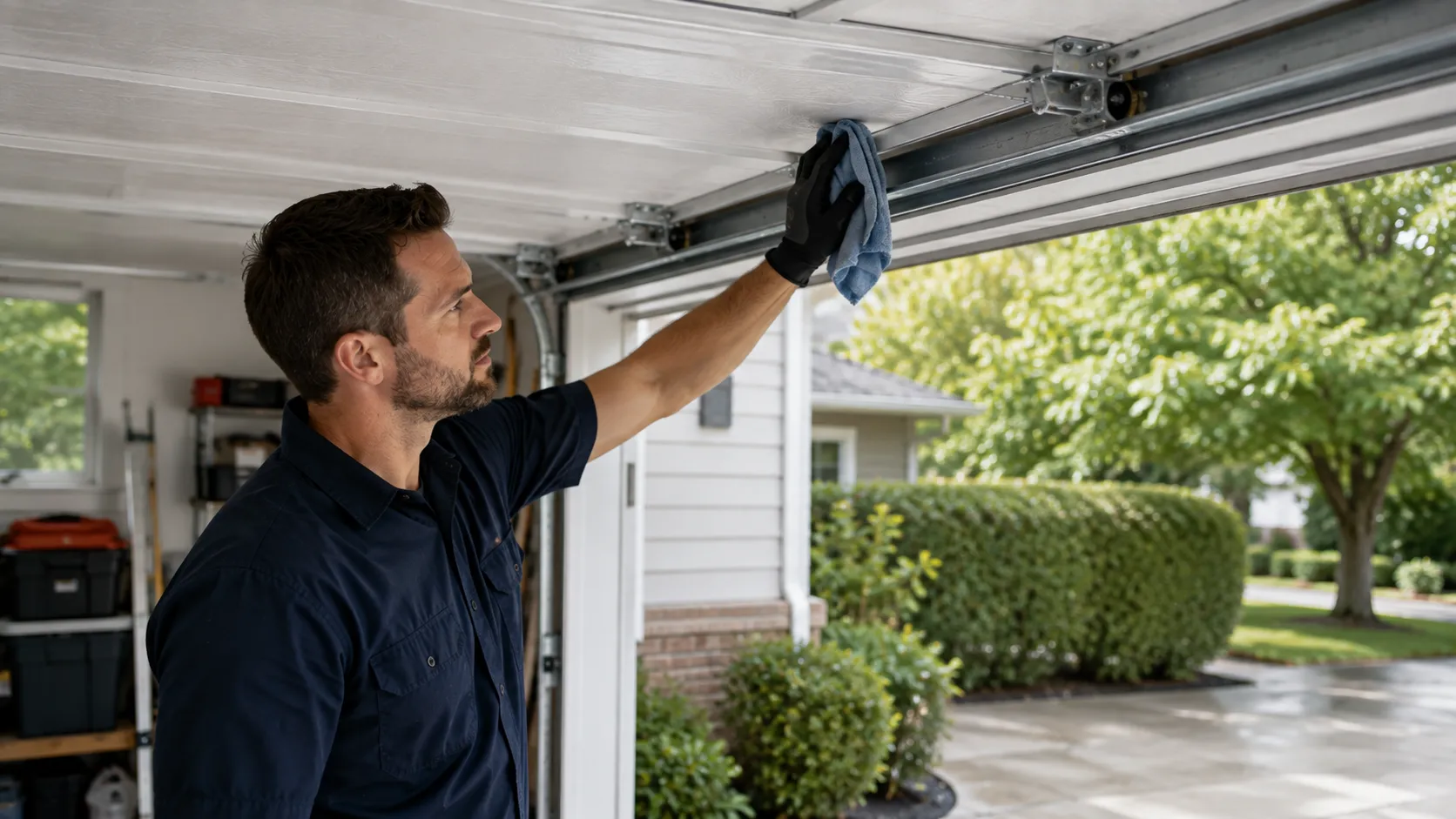
When a spring goes in cold weather, it's usually not because the cold caused new damage - it's because the cold added load to wear that had already been building for years. Springs are rated for a number of open-close cycles, and a garage door from the 1980s or 90s stock that makes up most of this area's housing has had a long time to work through that rating. Cold weather just happens to be when the last bit of margin runs out.
Openers fail differently. A motor that's been running for 30-plus years develops slack in its gearing gradually, and cold makes that slack noisy and obvious rather than causing it outright. If your opener is original to a 1980s or 90s build, it's already well past the point where most units of that generation have been swapped out.
Here's the honest limit: some 1980s-vintage opener motors use parts that nobody stocks anymore, and if a repair needs one of those, replacement is the more sensible call rather than waiting on a part that may not show up. With household incomes in this area averaging $157,171, replacing an aging opener outright is usually a realistic option rather than a stretch, even if the instinct is to repair first.
How We Can Help
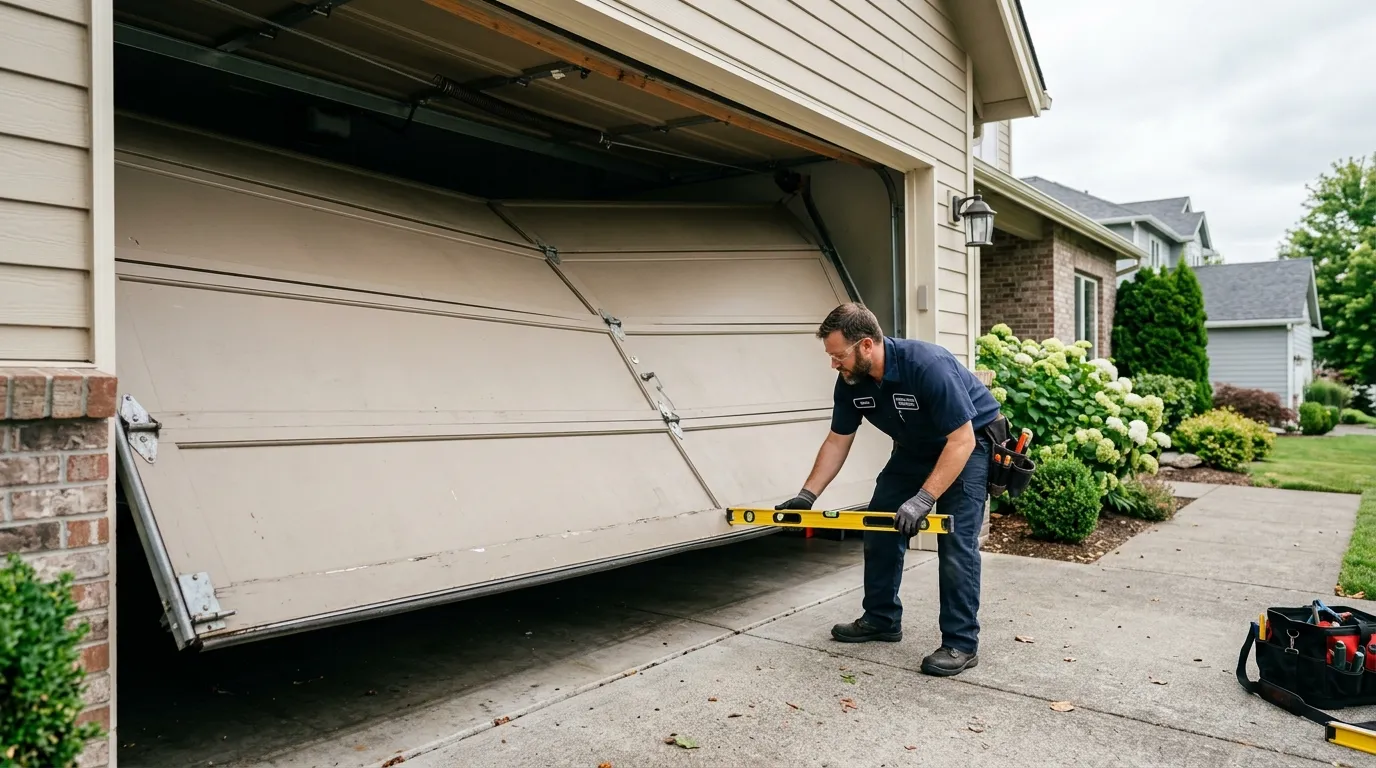
Garage Door Repair
Springs, cables, tracks, rollers, and openers fixed by a tech who explains the problem before touching anything.
Learn more →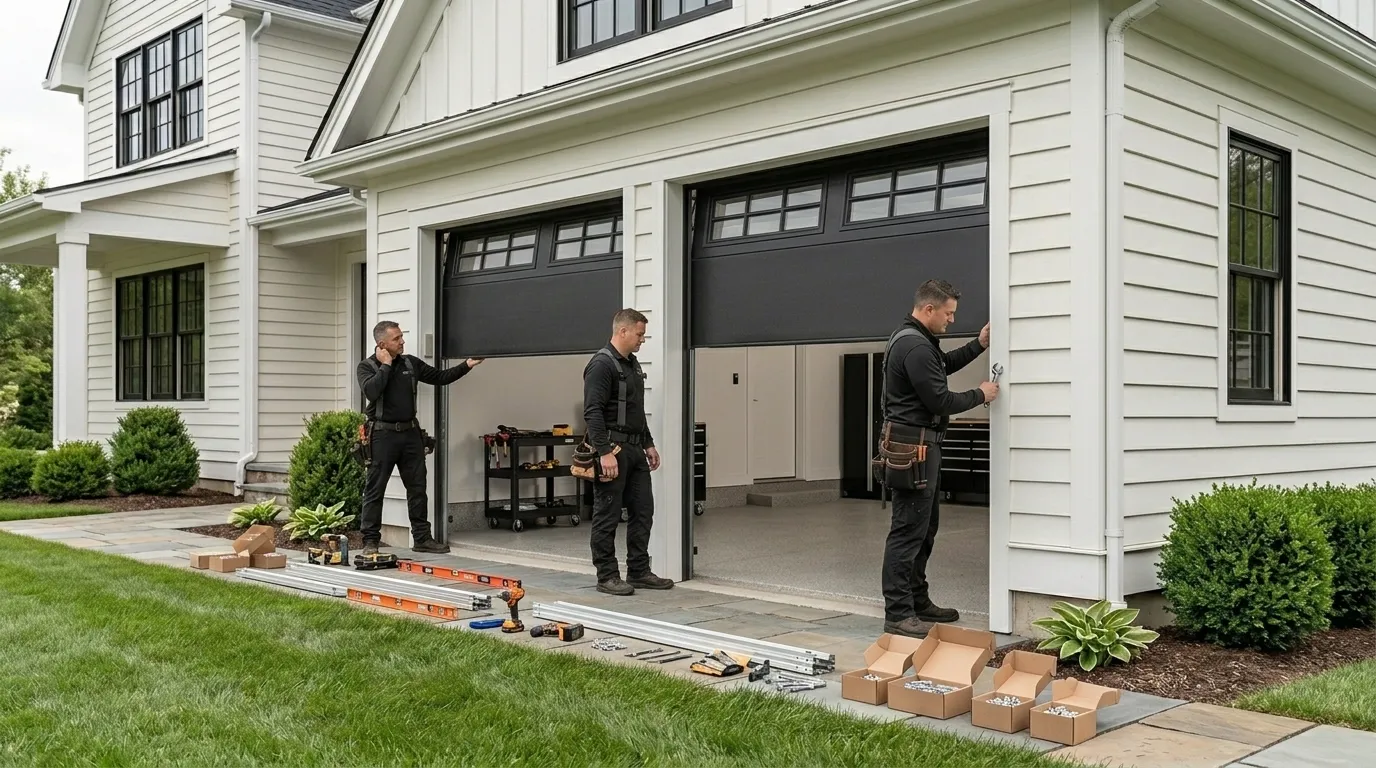
Garage Door Installation
New sectional doors sized and installed for the housing stock actually built in this area.
Learn more →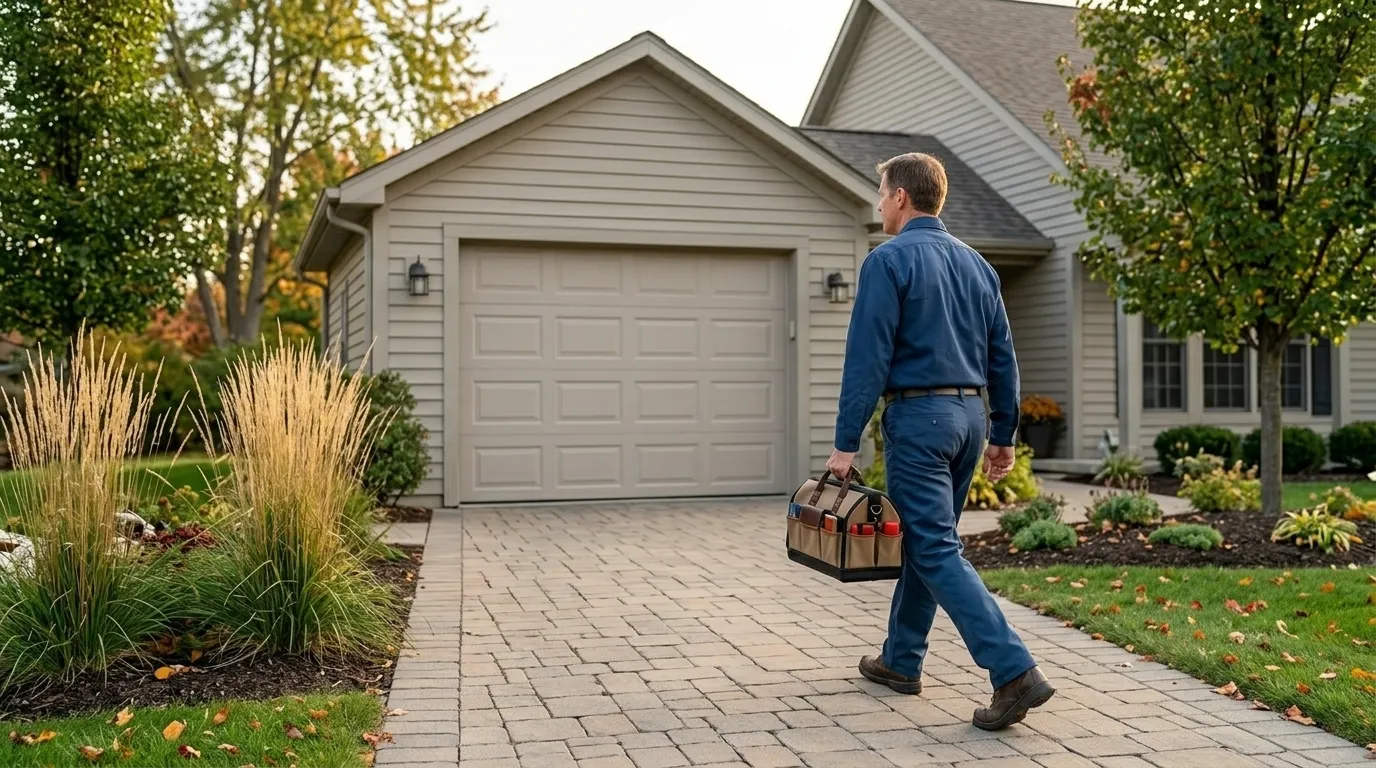
Garage Door Service
Tune-ups, lubrication, and safety checks that catch a small problem before it becomes a service call.
Learn more →Frequently Asked Questions
Why did my garage door spring break in the middle of winter with no warning?
Torsion spring wire tightens as it gets colder, which raises the tension the spring is holding without anything else changing. A spring that's been fine for years can be right at the edge of its cycle life, and a hard cold snap is often what finally pushes it past that point. It's wear that built up over time, not sudden cold damage.
Is my opener too old to keep repairing?
If your house is part of the 1980s or 90s stock common in this area and the opener is original, it's likely past 30 years old. Some motor parts from that generation aren't stocked anymore, so if a repair needs one, replacing the unit usually makes more sense than waiting on a part that may not be available.
Why does my door bind on one side only when the seasons change?
Freeze-thaw cycling can shift a concrete slab slightly, just enough to throw off track alignment that was fine before. This shows up most in early spring as ground temperatures swing, and it's a track adjustment issue rather than a sign the door itself is failing.
How do I know if my door's spring tension is off before it breaks?
Disconnect the opener and lift the door by hand to about halfway, then let go. A properly balanced door stays roughly in place. If it drops or shoots upward, the spring tension is off, and on a torsion spring that's not something to adjust yourself given the load on the wire.
Have a Door That Needs a Second Opinion?
Call and describe what it is doing - we will tell you what it likely is.