
Lone Tree Garage Door Guide
Why a Door Goes Off Track Here in Lone Tree
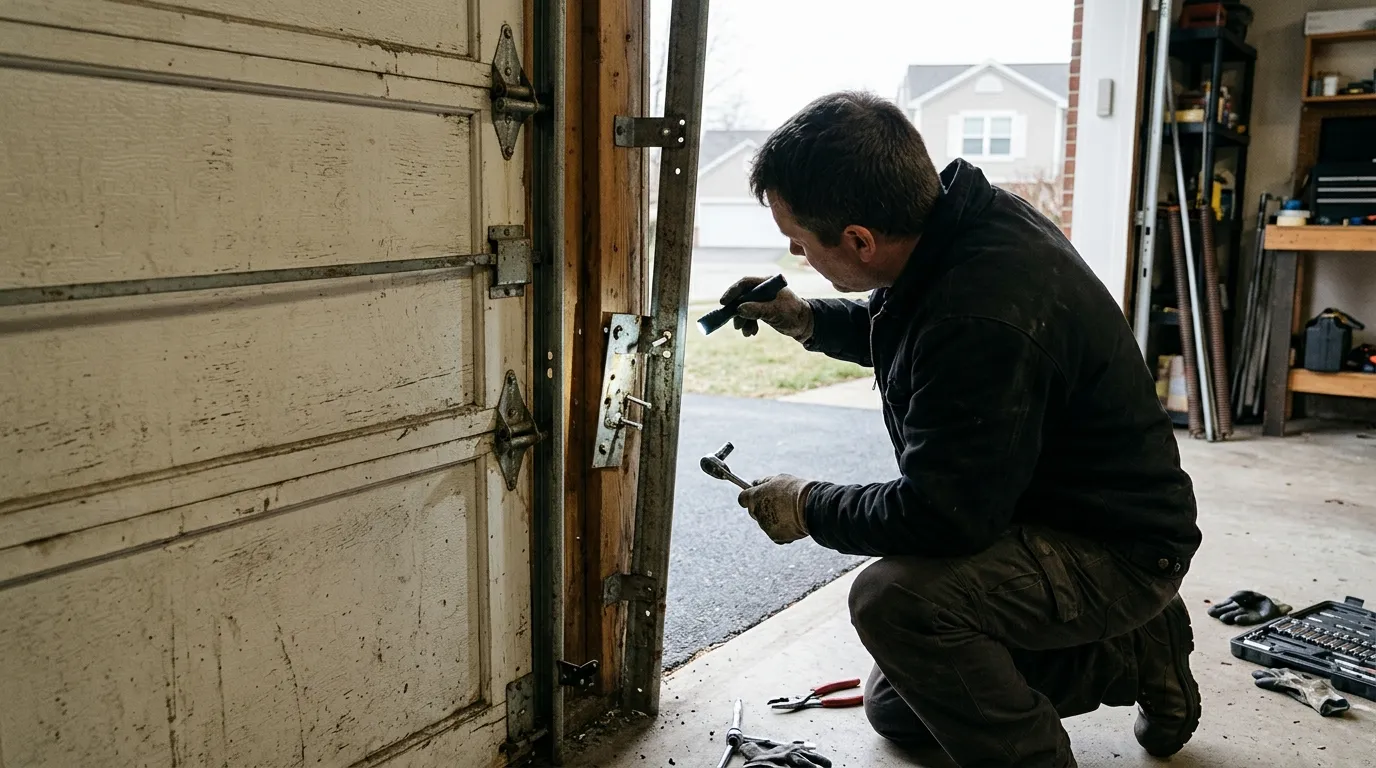
Lone Tree's 1980s-2000s tract housing and cold winters push doors off track in specific ways. Here's what to check before you call Lone Tree Garage Door Pros.
- Licensed & Insured
- Same-Area Service Calls
- Upfront Pricing
How Local Conditions Play In
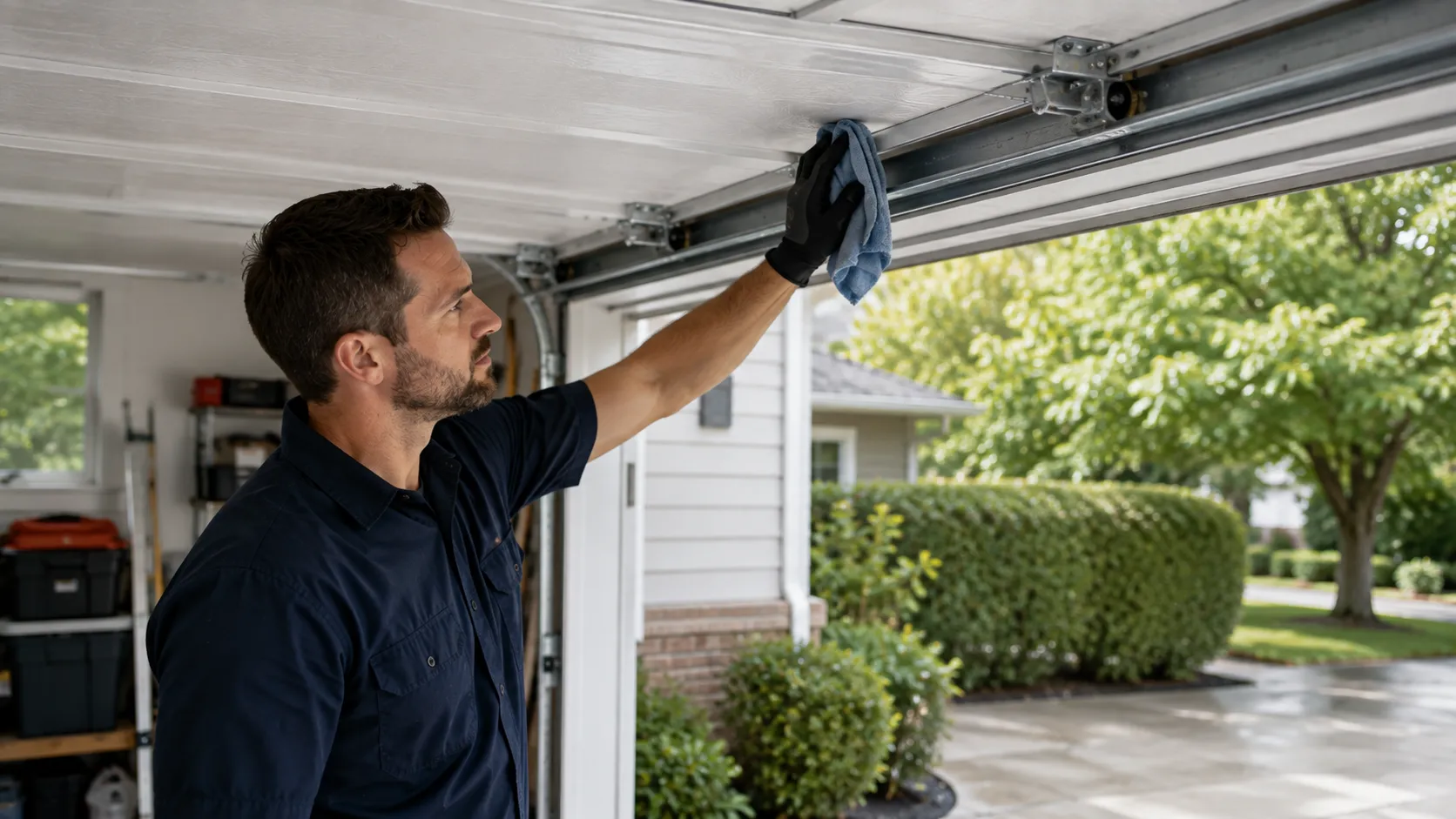
Most of the housing stock around Lone Tree went up between 1938 and 2005, with the median build year sitting at 1992. That means the majority of doors in this service area, from Meridian to Stonegate to Grand View Estates, are riding on tracks and rollers that are 20 to 35 years old.
Steel track bends slowly. A roller that's worn from three decades of cycling doesn't announce itself with a bang - it walks a hair off center every winter and nobody notices until the door binds.
The cold-severe climate band this area sits in matters more than people think. Track brackets are lag-bolted into jamb studs, and repeated freeze-thaw cycles work those bolts loose a quarter turn at a time.
Once a bracket has play in it, the track flexes under the door's weight instead of holding a straight line, and that's when a panel starts riding a roller up onto the flange instead of inside it. This isn't a defect specific to one builder - it's what happens to any track system that's been through 30-plus Front Range winters without the brackets getting checked.
Checking It Yourself
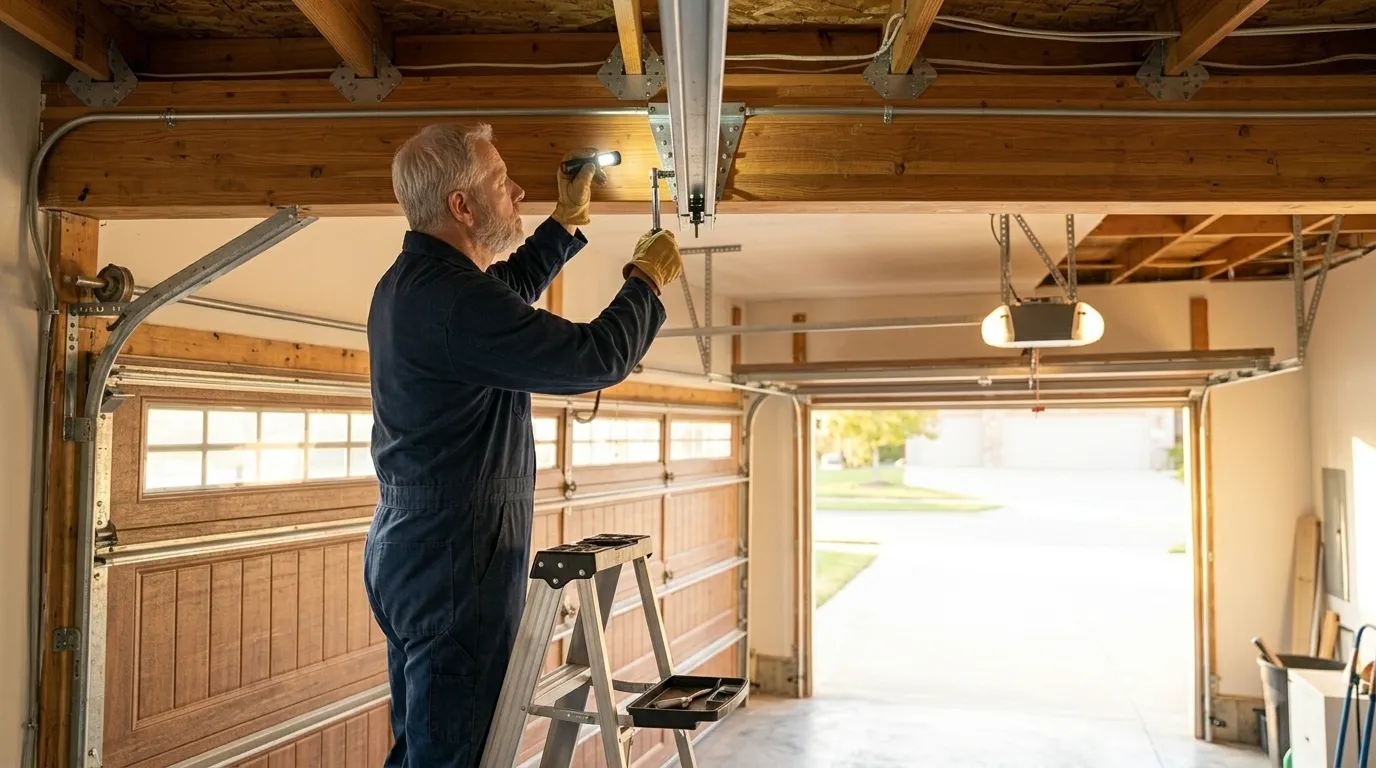
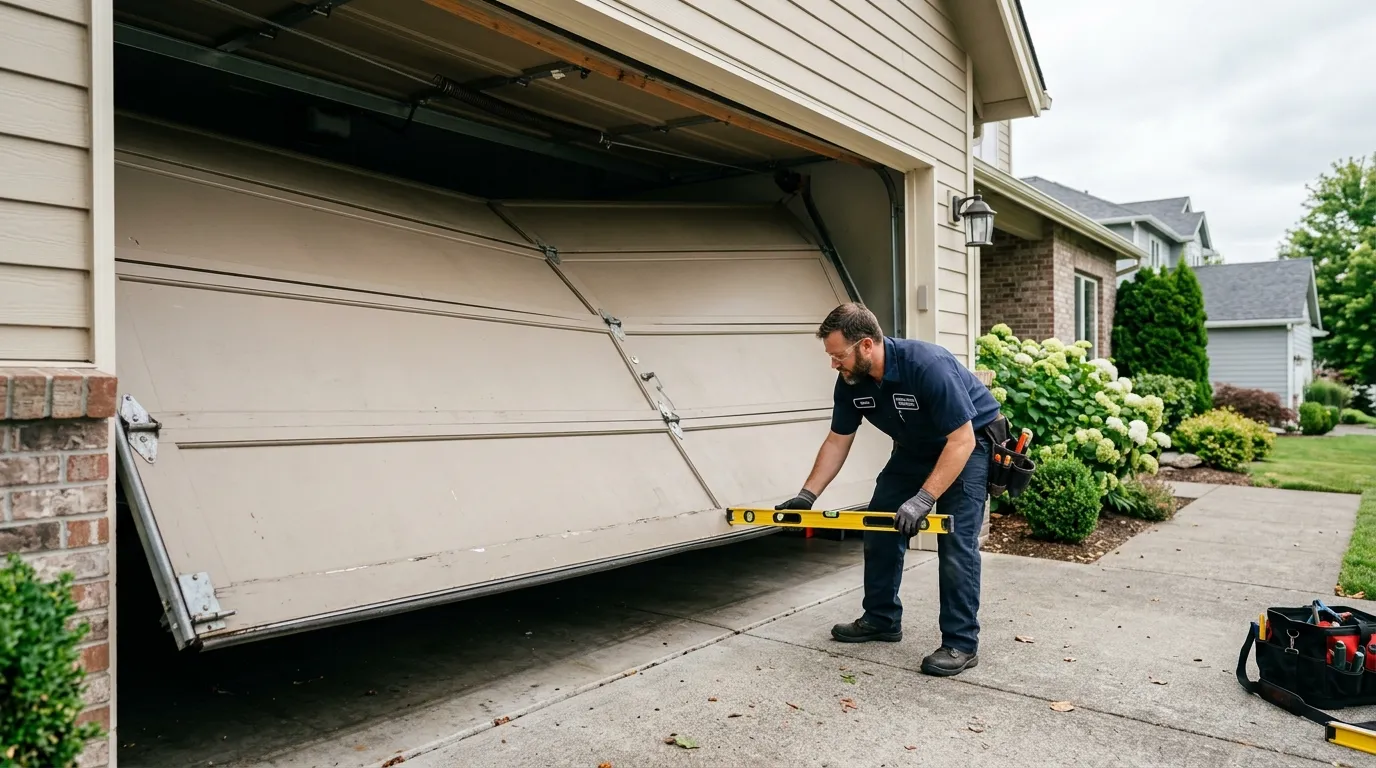
Pull the release handle so the door is disconnected from the opener, then move it by hand. If it drags, catches, or wants to fall to one side partway up, the track is out of alignment somewhere along its run - you'll usually find the gap by eye where the door pulls away from the wall on one side.
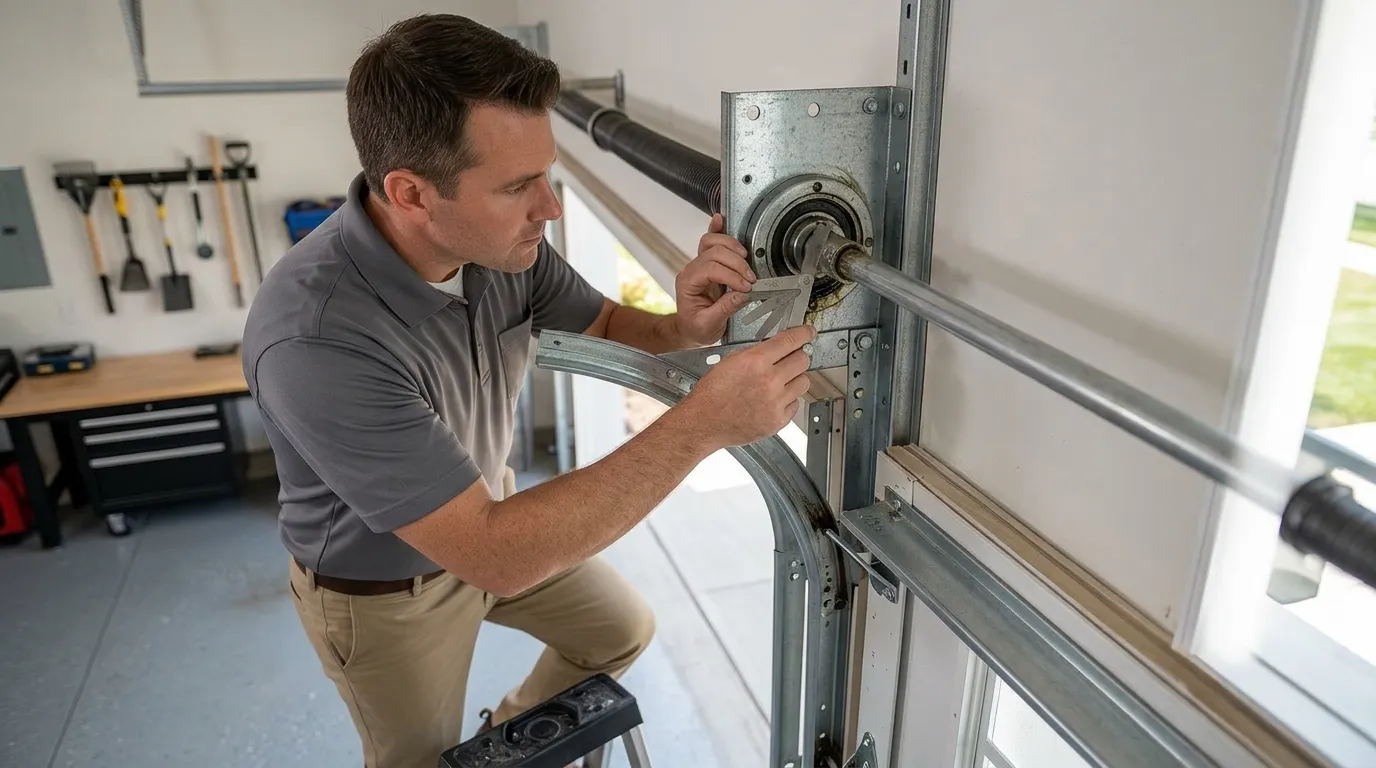
Next, look at the mounting brackets where the vertical track meets the jamb. On homes from the 1980s and 90s stock common across this area's 21 named neighborhoods, these are original lag bolts more often than not. If you can wiggle a bracket with your hand, that's your off-track cause, not the rollers.
Check the rollers themselves for flat spots or a chipped nylon edge - common once a roller's put in 25-plus years of Colorado winters. A roller that's cracked or missing a chunk will jump the track under load, especially on the last few feet of travel where the curved section meets the horizontal run.
None of this requires tools beyond a flashlight and a ladder, but if the door is under spring tension and won't move freely, stop there. That's not a track problem anymore.
Season by Season
Fall is when loose brackets and worn rollers usually surface, because temperatures start swinging 40+ degrees between afternoon and night and steel contracts unevenly. A track that was borderline all summer starts showing a visible bow.
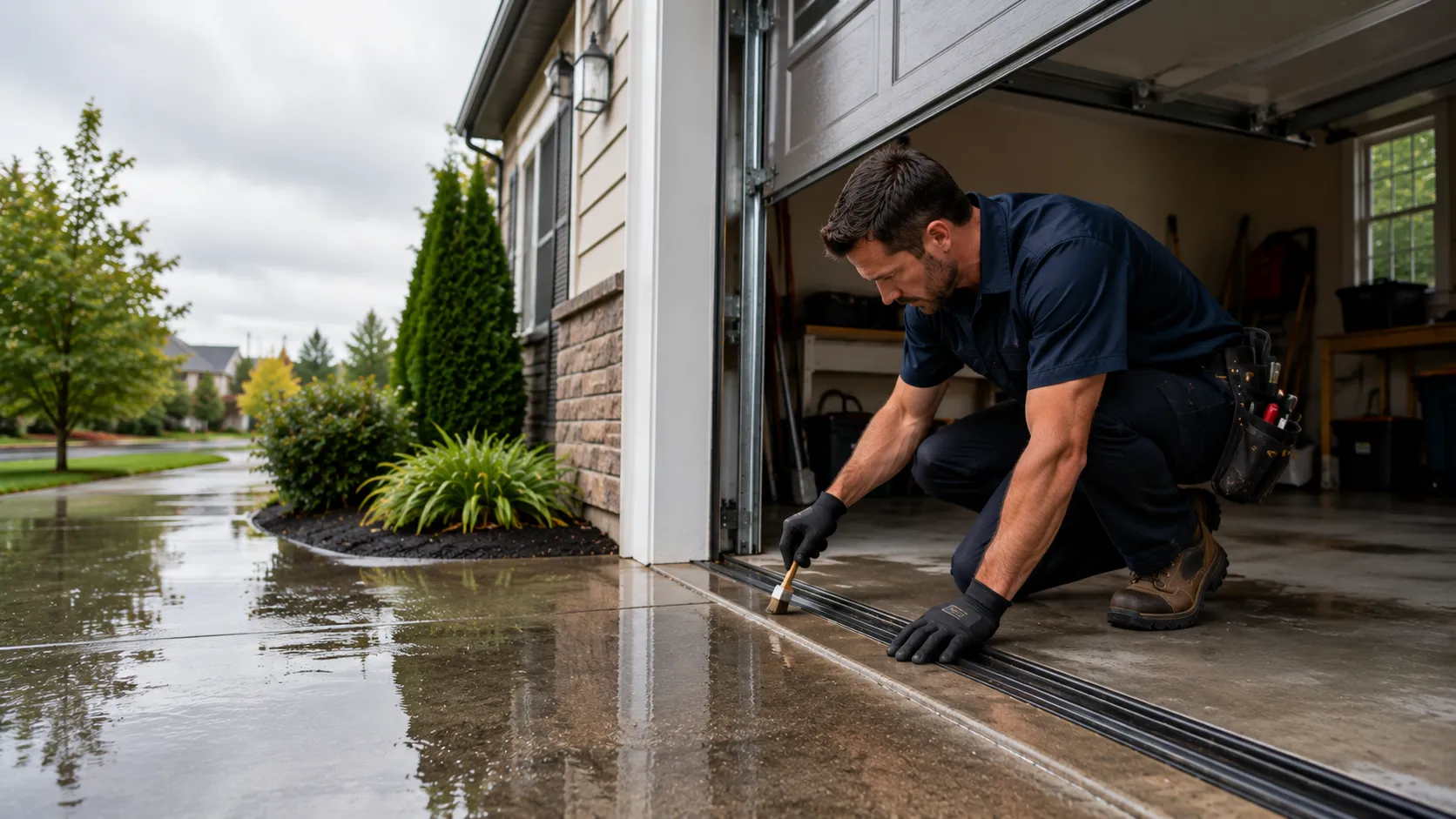
Winter is the worst month for off-track doors in a cold-severe climate like this one. Ice buildup at the bottom panel adds resistance right as the door tries to close, and if a track bracket already has play in it, that extra drag is enough to pull the roller out of the channel entirely. This is the season we see the most track calls tied to houses built in the 1990s median-age range, since original hardware is now at the point where it's had three decades of freeze-thaw cycling.
Spring brings a different problem: ground settling from winter frost heave can shift a slab enough to throw the whole door frame out of square by a fraction of an inch, which is more than enough to walk a roller off its track on a door that was already close to the edge. Summer is comparatively easy on tracks - it's the one season where a bent track is more likely from an impact than from weather.
What Is Going On
Once a door is off track, don't force the opener to keep cycling it. That bends the track further and can pull the roller stem, which turns a bracket fix into a track-and-roller replacement. The honest limitation here: if a track has been forced repeatedly, straightening it back into alignment sometimes buys a season, but on a track that's already stretched or kinked, replacement holds up better than a repair - we won't sell you a fix that won't last through the next cold stretch.
Given the age range across this service area, roughly 1938 to 2005 with most homes clustering in the 80s and 90s, track and bracket wear is one of the more common calls we get, not a rare failure. If your door is dragging or hanging crooked, that's worth a look before it becomes a jammed door on a Saturday morning in January.
How We Can Help
Garage Door Repair
Springs, cables, tracks, rollers, and openers fixed by a tech who explains the problem before touching anything.
Learn more →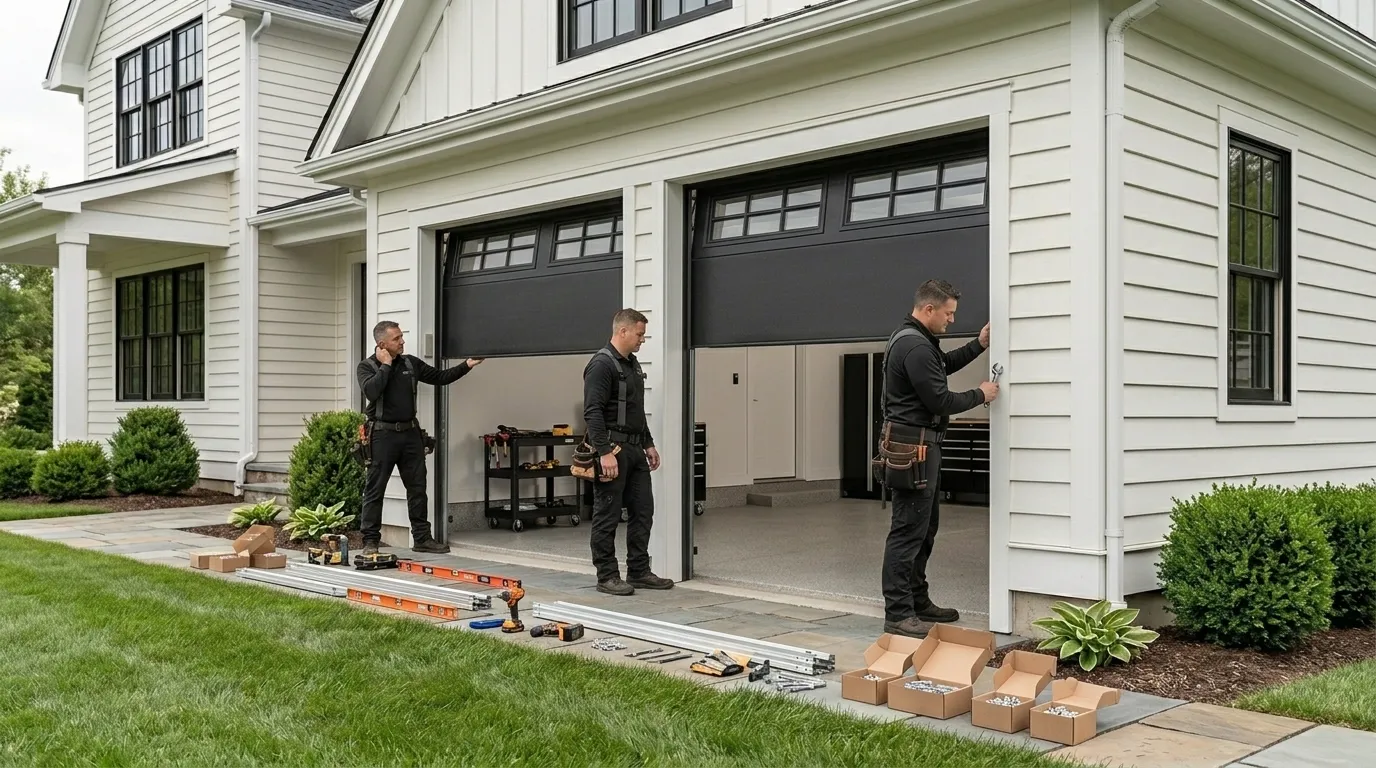
Garage Door Installation
New sectional doors sized and installed for the housing stock actually built in this area.
Learn more →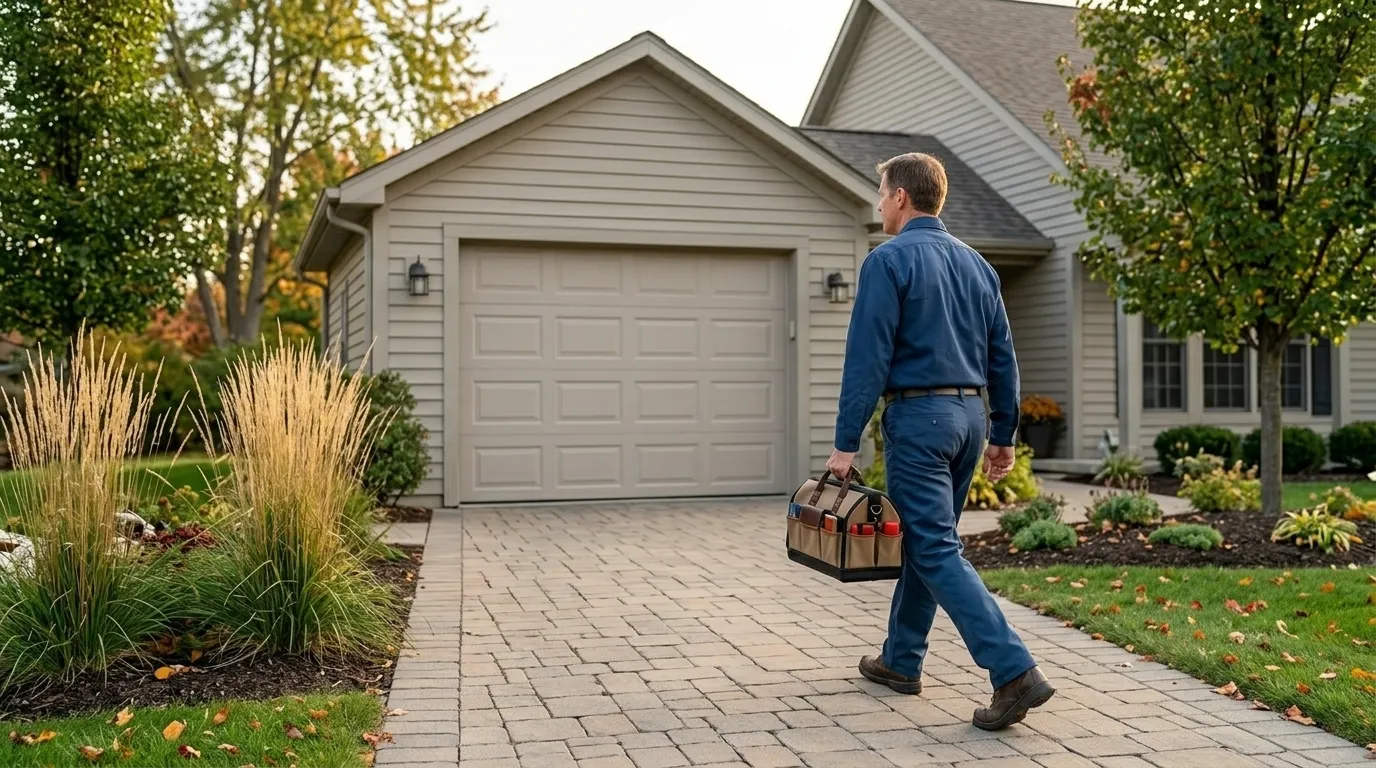
Garage Door Service
Tune-ups, lubrication, and safety checks that catch a small problem before it becomes a service call.
Learn more →Frequently Asked Questions
Why did my garage door suddenly come off the track this winter?
In a cold-severe climate like Lone Tree's, freeze-thaw cycles loosen the lag bolts holding track brackets to the jamb over years. Add ice at the bottom panel and extra drag on closing, and a bracket that already had play will let the roller walk out of the channel, usually during the coldest stretch of the season.
Is a bent track something I can fix myself?
You can sometimes tap a mild bend back into place, but if the track has been forced by the opener while off track, it's often stretched beyond a clean fix. On houses with original hardware from the 1980s-90s building era common here, we usually recommend replacing the section rather than reshaping it.
How old does a track have to be before it's a problem?
Age alone doesn't wear out a track, but the housing stock in this area runs 1938 to 2005 with a median build year of 1992, which means a lot of tracks are 25-35 years into freeze-thaw cycling on their original mounting bolts. That's the point where brackets loosen and off-track calls go up.
Have a Door That Needs a Second Opinion?
Call and describe what it is doing - we will tell you what it likely is.