
Lone Tree Garage Door Guide
Deciding If Your Lone Tree Garage Door Still Has Life Left
Most Lone Tree homes were built between 1938 and 2005, largely in the 1980s and 90s, and that age plus our cold winters decides if your door is worth fixing.
- Licensed & Insured
- Same-Area Service Calls
- Upfront Pricing
How Local Conditions Play In
Most houses in this service area went up between 1938 and 2005, with the bulk of that stock dating to the 1980s and 90s. Across the 21 named areas we cover, the median build year sits around 1992. That matters more than most homeowners think, because a door installed when a house was framed is often still hanging on the original track, and the springs, rollers, and hinges from that era were built to a different standard than what's sold today.
This region sits in a cold, severe winter climate band, which means the steel and hardware on a door see repeated freeze-thaw cycles every year, and that cycle is harder on a 30-year-old torsion spring than on a five-year-old one. With 23,386 owner-occupied houses among 35,073 households here, a lot of doors installed during that same 1980s-90s wave are now reaching the point where hardware fatigue shows up as noise, drift, or a spring that lets go without warning. The median household income here, $157,171, is high enough that replacement with an insulated door is often on the table rather than a stopgap repair, but that doesn't mean every older door needs to go.
Plenty of doors from that build era still have good bones under an old finish.
Checking It Yourself
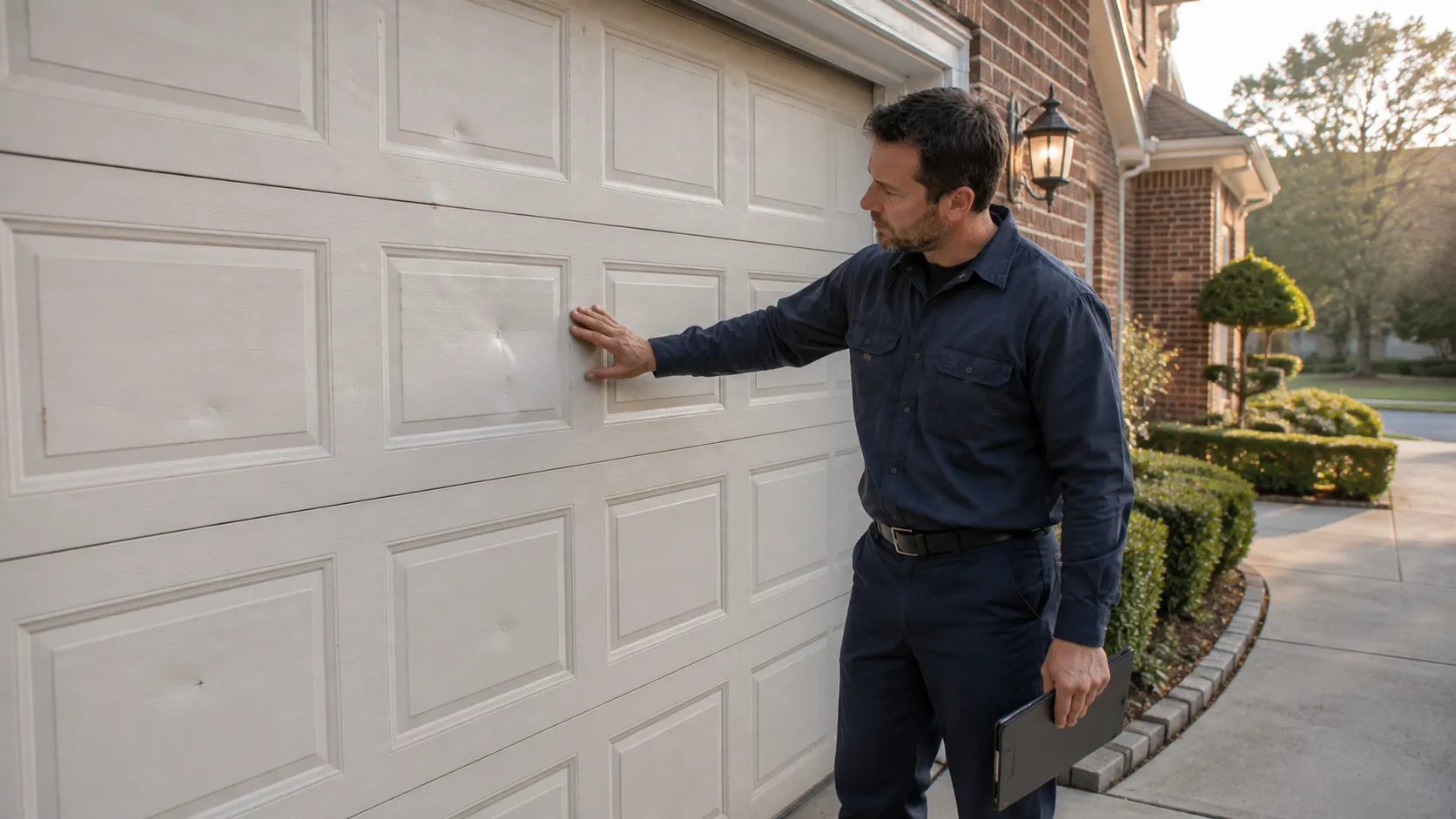
Start with the panels. If your house dates to that 1980s-90s wave that's common across this area, the door is likely a steel sandwich panel with a thin foam core, not the thicker polyurethane fill used now. Press on a panel between the ribs - if it flexes a lot or sounds hollow and crunchy, the foam has broken down and the panel is losing whatever insulating value it had.
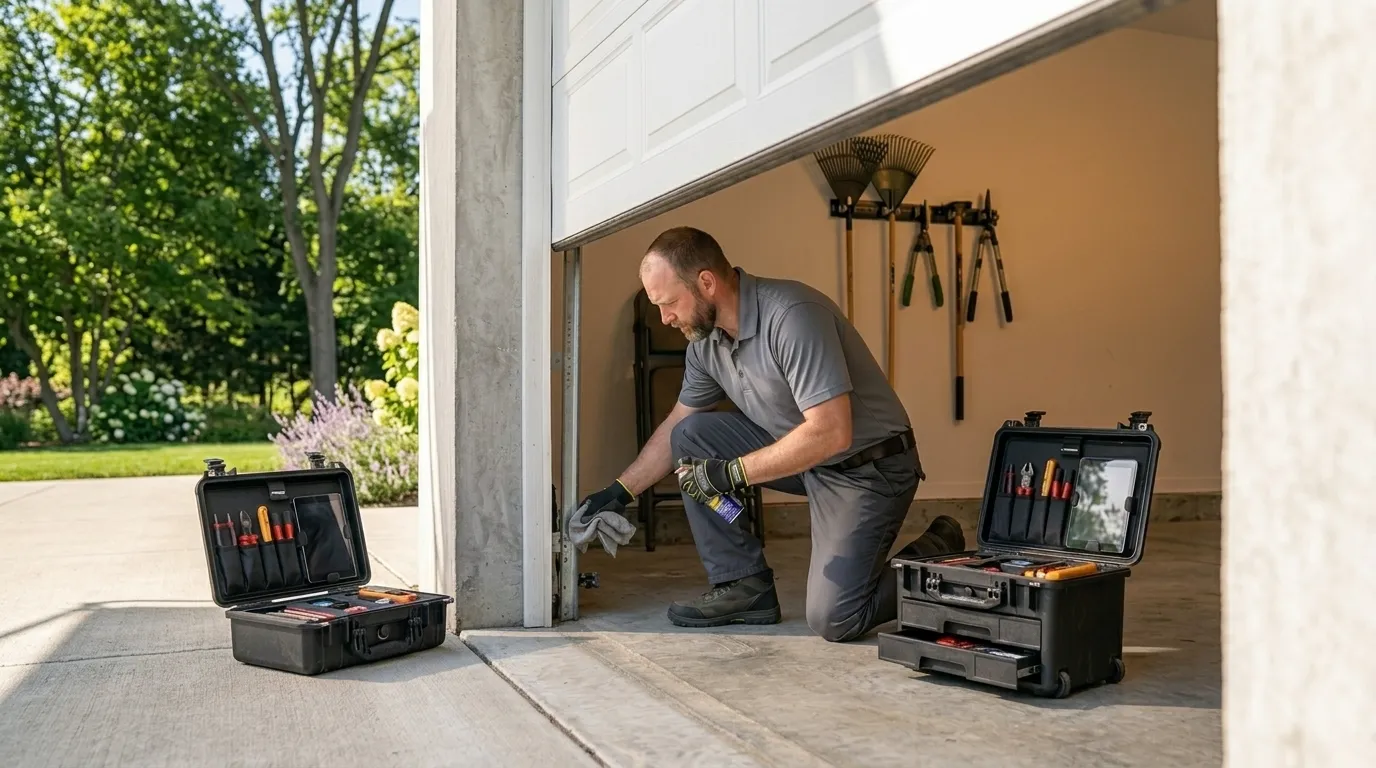
Next, look at the torsion spring above the header. A spring original to a build from that period is well past its rated cycle count by now; look for gaps between the coils when the door is down, or a spring that looks stretched compared to its neighbor if you have a double door with two. Check the rollers - metal rollers riding in a track that's pitted or rusted at the bottom means water has been getting in, which in a cold, severe climate points to ice forming in the track overnight.
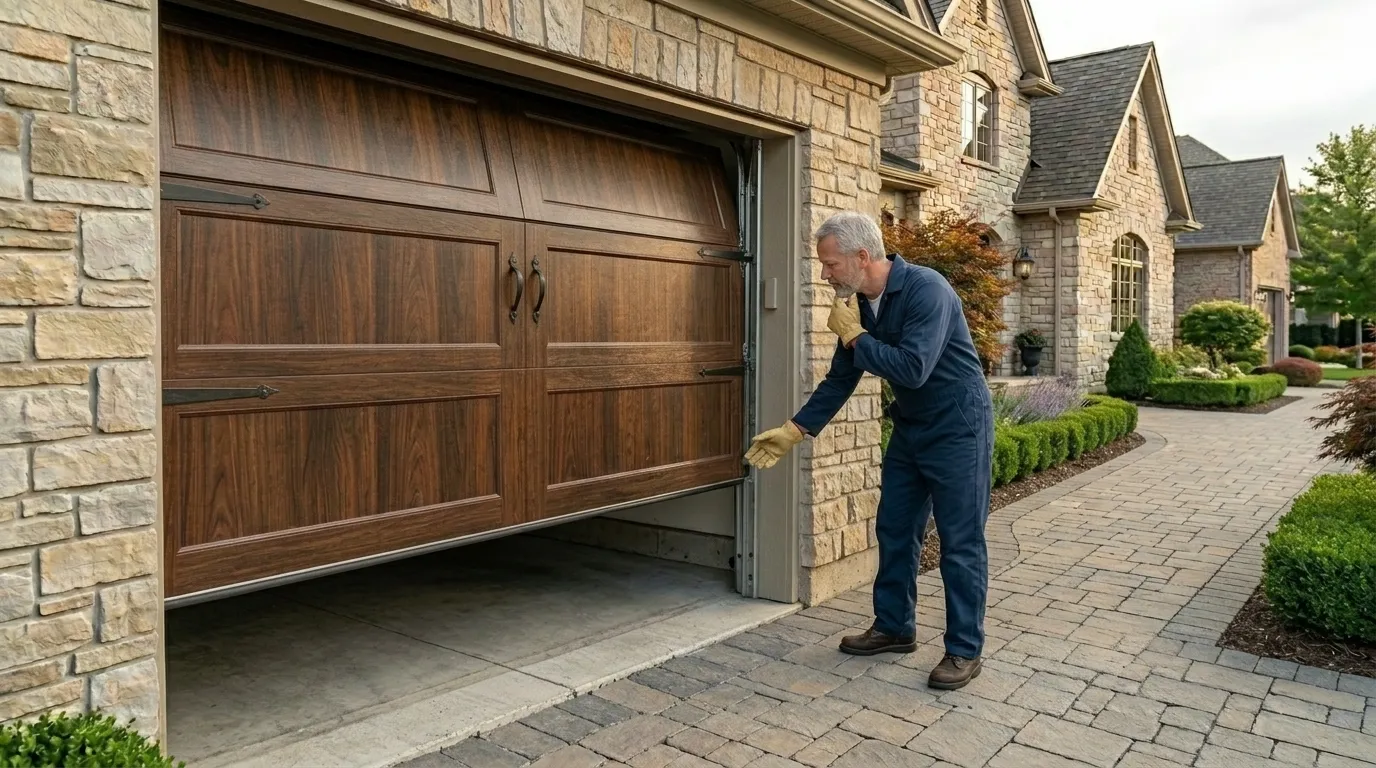
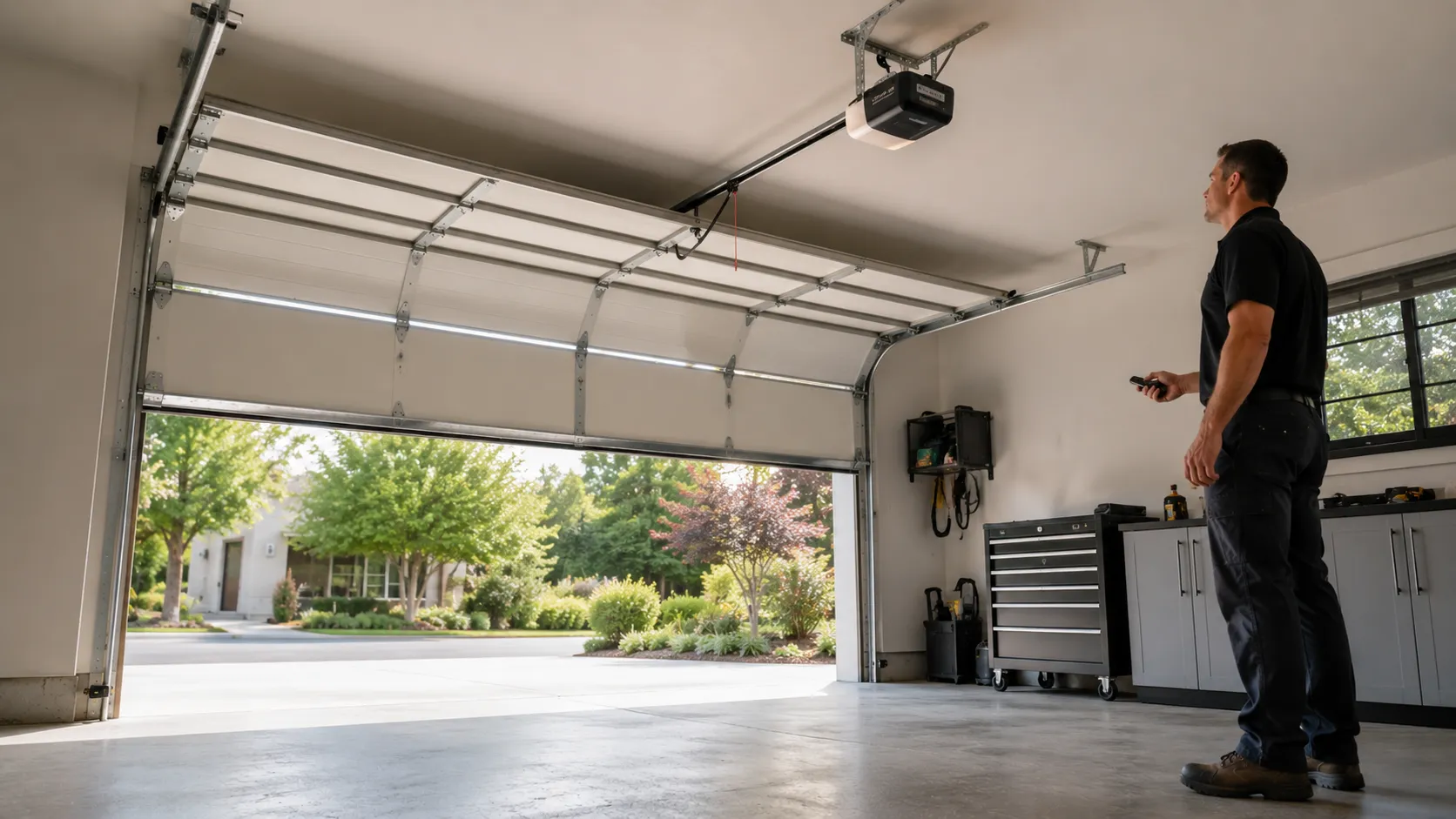
Last, run the door by hand with the opener disconnected. A door balanced correctly stays roughly where you leave it, at any height. One that slams down or won't stay up on its own has a spring problem, not an opener problem, no matter what the remote is doing.
Season by Season
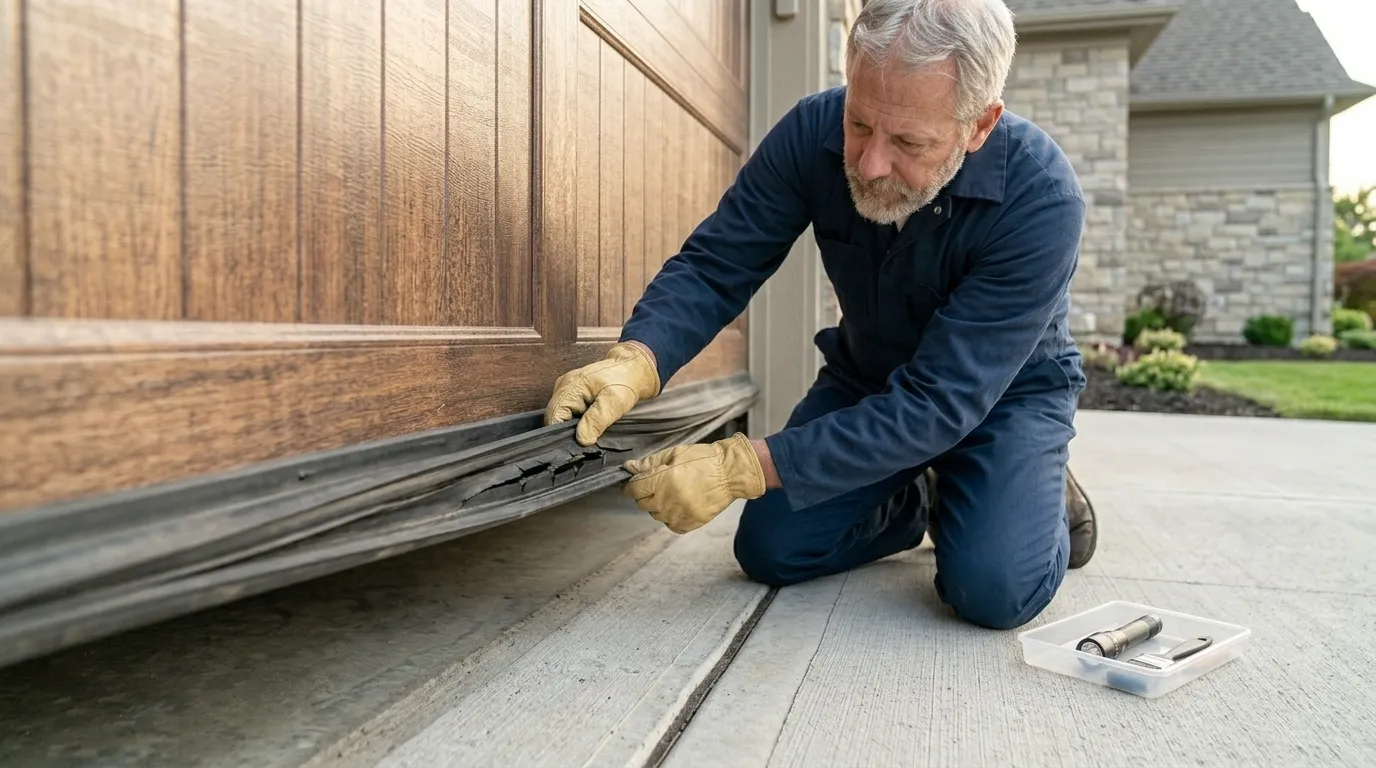
In a cold, severe winter, the biggest change isn't the temperature on the door itself - it's what cold does to grease, rubber, and metal. Old lubricant on rollers and hinges thickens up and stops doing its job right when the opener is working hardest against a cold, stiff spring. The bottom seal, especially if it's original to a door from the 1980s-90s stock common here, loses flexibility and stops sealing against the slab, which lets in drafts and sometimes ice buildup at the threshold.
Spring problems also cluster in the coldest stretch of winter, because steel contracts and a spring already near the end of its life is more likely to fail under the extra tension cold puts on it. Come the warmer months, the same door often runs quieter and looks fine, which is exactly when a lot of homeowners put off dealing with what they noticed in January. Summer heat isn't nothing either - it's the season to check weatherstripping and re-lubricate before the next cold stretch, since a door that's been struggling all winter usually gives more warning signs in fall than most people catch.
What Is Going On
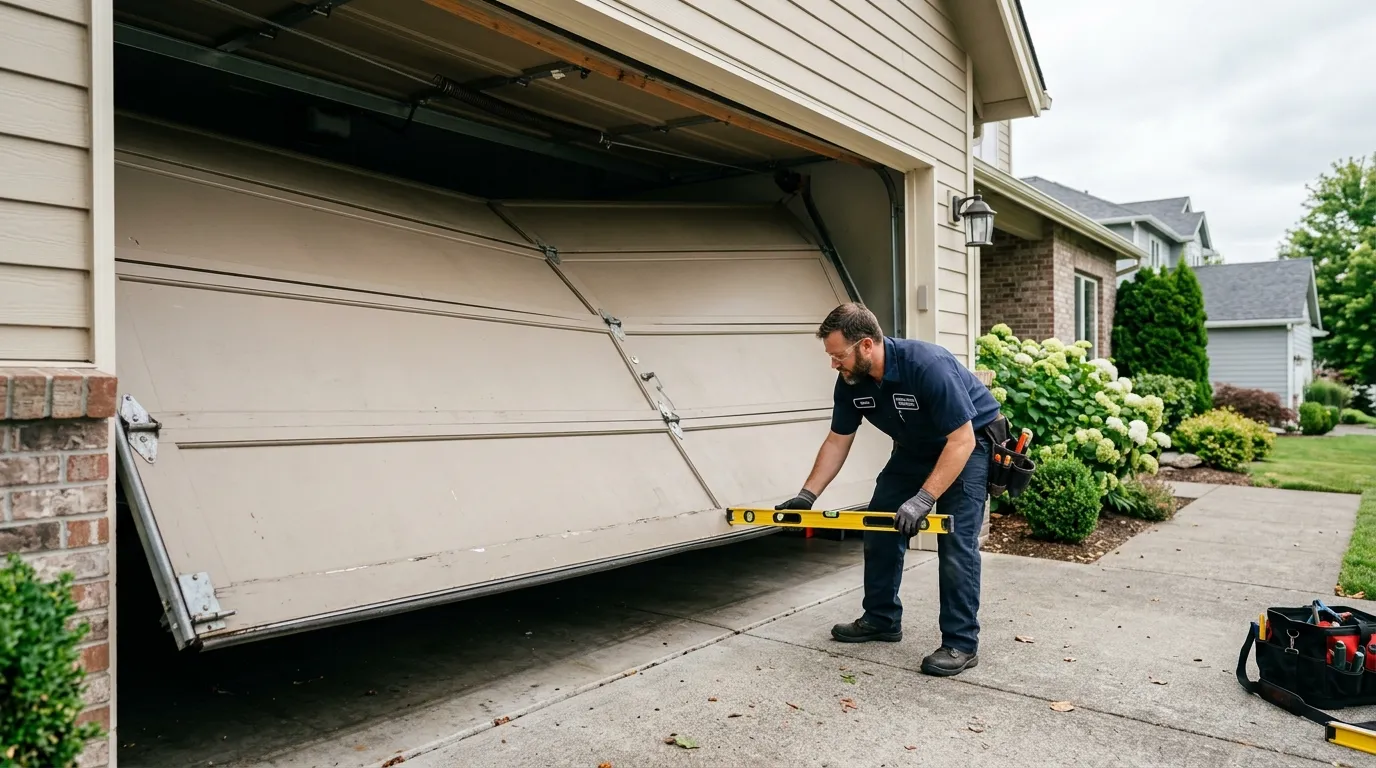
When a door from that 1938-2005 build range starts acting up, it's usually one of three things: the spring has reached the end of its cycle life, the track has racked slightly out of alignment from years of seasonal expansion and contraction, or the panels themselves have degraded enough that the door is heavier and less balanced than it was new. None of those are reasons to replace on their own - a spring swap or a track adjustment is often the whole job.
Where we start talking replacement instead of repair is when the door has two or more of those problems at once, or when the panels are dented and delaminating badly enough that a new spring set would just be propping up a door that's failing anyway. One honest limit: if a part is specific to an older, discontinued panel style, we may not be able to source an exact match quickly, and matching finish on a single replacement panel next to 20-year-old faded paint rarely looks right - at that point a full door often makes more sense than a patch.
How We Can Help
Garage Door Repair
Springs, cables, tracks, rollers, and openers fixed by a tech who explains the problem before touching anything.
Learn more →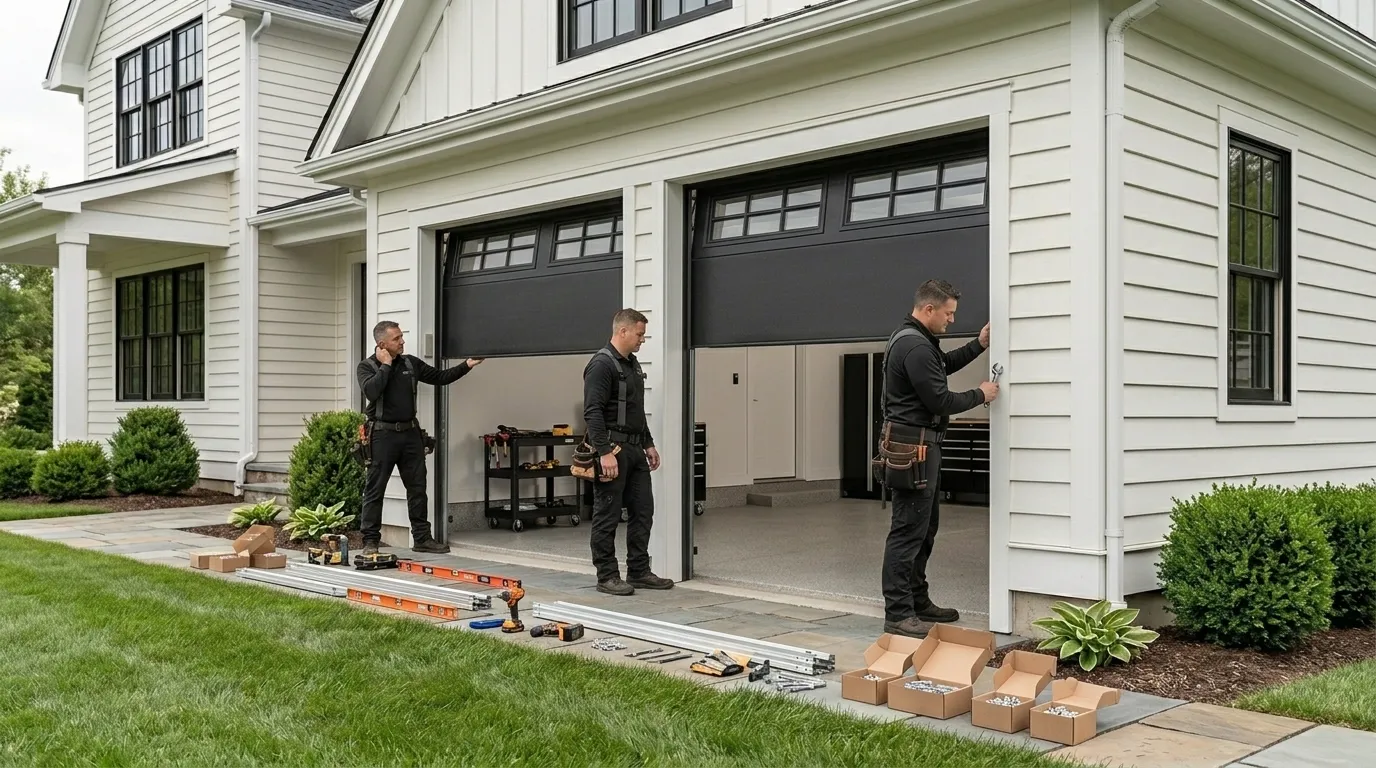
Garage Door Installation
New sectional doors sized and installed for the housing stock actually built in this area.
Learn more →
Garage Door Service
Tune-ups, lubrication, and safety checks that catch a small problem before it becomes a service call.
Learn more →Frequently Asked Questions
How do I know if my garage door is original to my house?
If your home was built during the 1980s-90s wave common across this area, check the spring and track for a manufacture date sticker, usually on the end bracket. No sticker doesn't mean newer - a lot of doors from that era were never labeled. The panel style and thickness are a better clue than any sticker.
Is it worth insulating an old steel door instead of replacing it?
Sometimes. If the panels are still straight and the foam core hasn't crumbled, adding a insulation kit can help in our cold, severe winters. But if the panels flex a lot when pressed, the foam is already failing, and a kit won't fix that - replacement is the better use of money at that point.
Why did my spring break in the middle of winter?
Cold steel is more brittle under tension than warm steel, and a spring already near the end of its rated cycles is more likely to snap when temperatures drop hard. If your house is from that 1980s-90s stock common here, the spring is likely original and simply due.
Have a Door That Needs a Second Opinion?
Call and describe what it is doing - we will tell you what it likely is.